I’m not sure what the MELEK.salon logo is about
But I did some research on Tawasi Melek and found these beautiful Peacock images
Maybe these should be the symbol a logo of MELEK
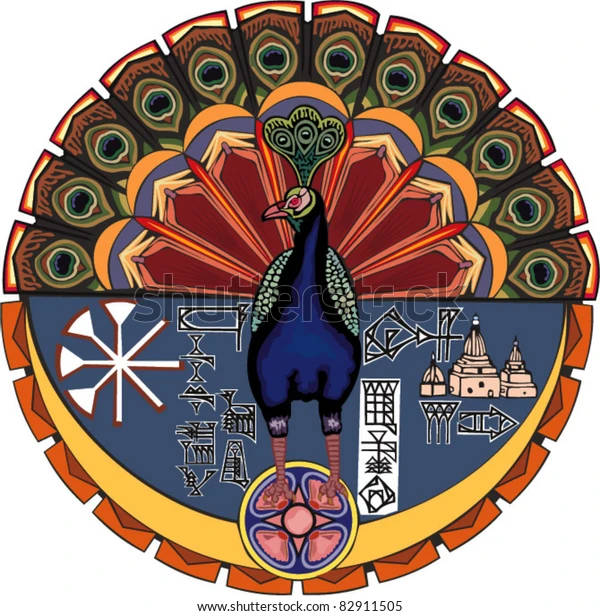
Melek Taûs, the Peacock Angel. This emblem features Tawûsî Melek in the center, the Sumerian diĝir on the left, and the domes above Sheikh 'Adī's tomb on the right.
Symbolism of the Peacock in religious life
In Yazidism, the Peacock, the symbol or icon of Tawûsî Melek, is believed to represent the diversity of the World, the colourfulness of its feathers being considered to symbolise the myriad colours of Nature. The radiating feathers of the peacock’s tail, revealed when it unfurls them in circular display, are held to symbolise the rays of the sun, bestowing their life-giving light each day at dawn. It is therefore considered a sacred bird, which Yazidis are expressly forbidden to hunt, eat, curse or ill-treat in any way. For this reason countless peacock images are to be found adorning the preeminent sanctuary of Lalish and all manner of other Yazidi shrines and holy sites, as well as the homes of the Yazidi faithful and their social, cultural and academic centres.
Tawûsî Melek or Melek Taûs[a] (Kurdish: تاوسی مەلەک, romanized: Tawûsî Melek, lit. 'Peacock Angel')is one of the central figures of Yazidism.
In Yazidi creation stories, before the creation of this world, God created seven Divine Beings, of whom Tawûsî Melek was appointed as the leader.[8] God assigned all of the world's affairs to these seven Divine Beings, also often referred to as the Seven Angels or heft sirr ("the Seven Mysteries").
Source : https://en.wikipedia.org/wiki/Taw%C3%BBs%C3%AE_Melek
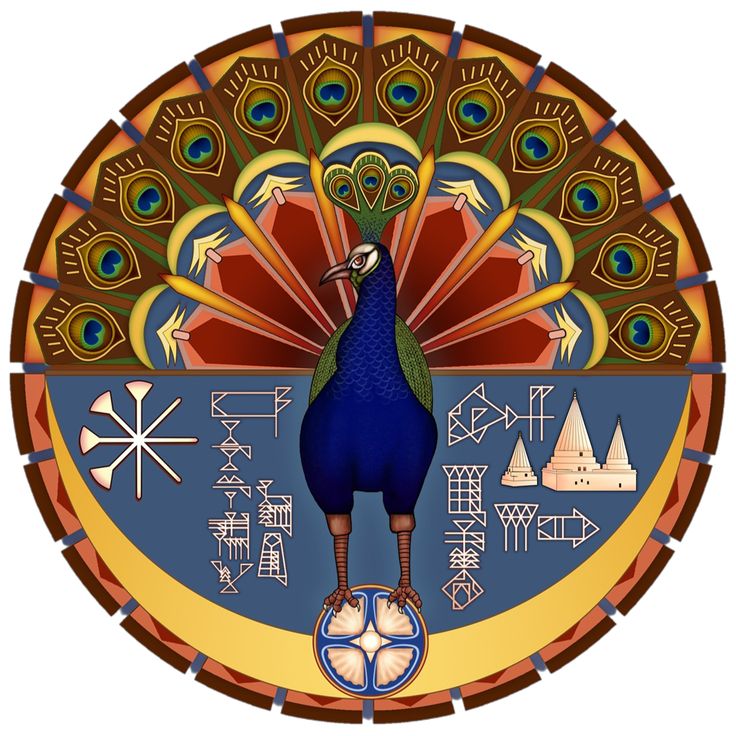
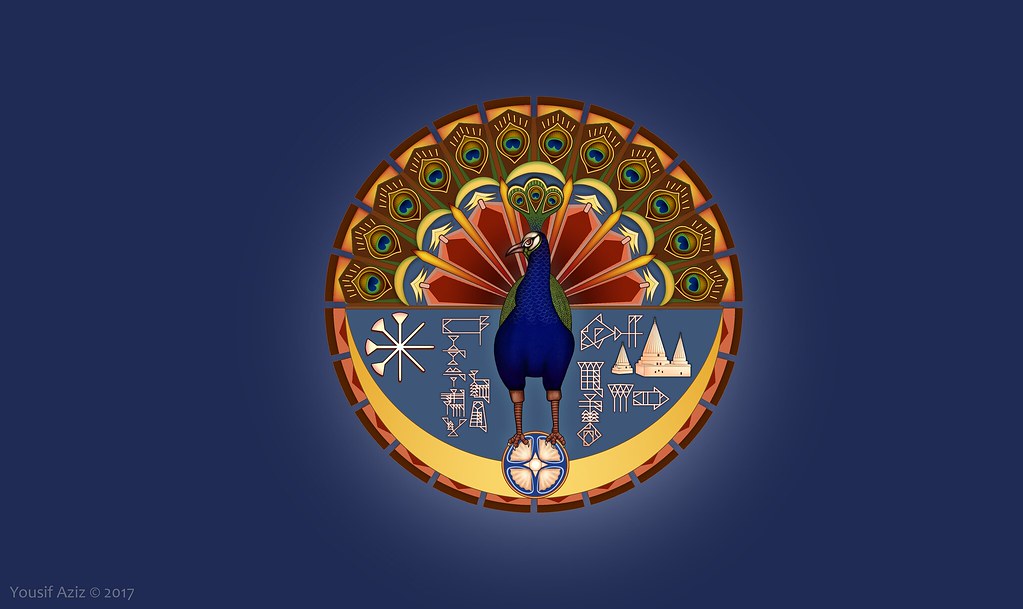
In Yazidi beliefs, Tawûsî Melek, the Lord of this World, is responsible for all that happens on this world, both good and bad. According to religious tradition, Nature, with its myriad phenomena of light and darkness, emanates from a single source, that is Tawûsî Melek. Qewl passages emphasize Tawûsî Melek's power on the earth, in the sky, sea, on the mountains, and their residents, that is, his power exists in all parts of nature, whether celestial or terrestrial
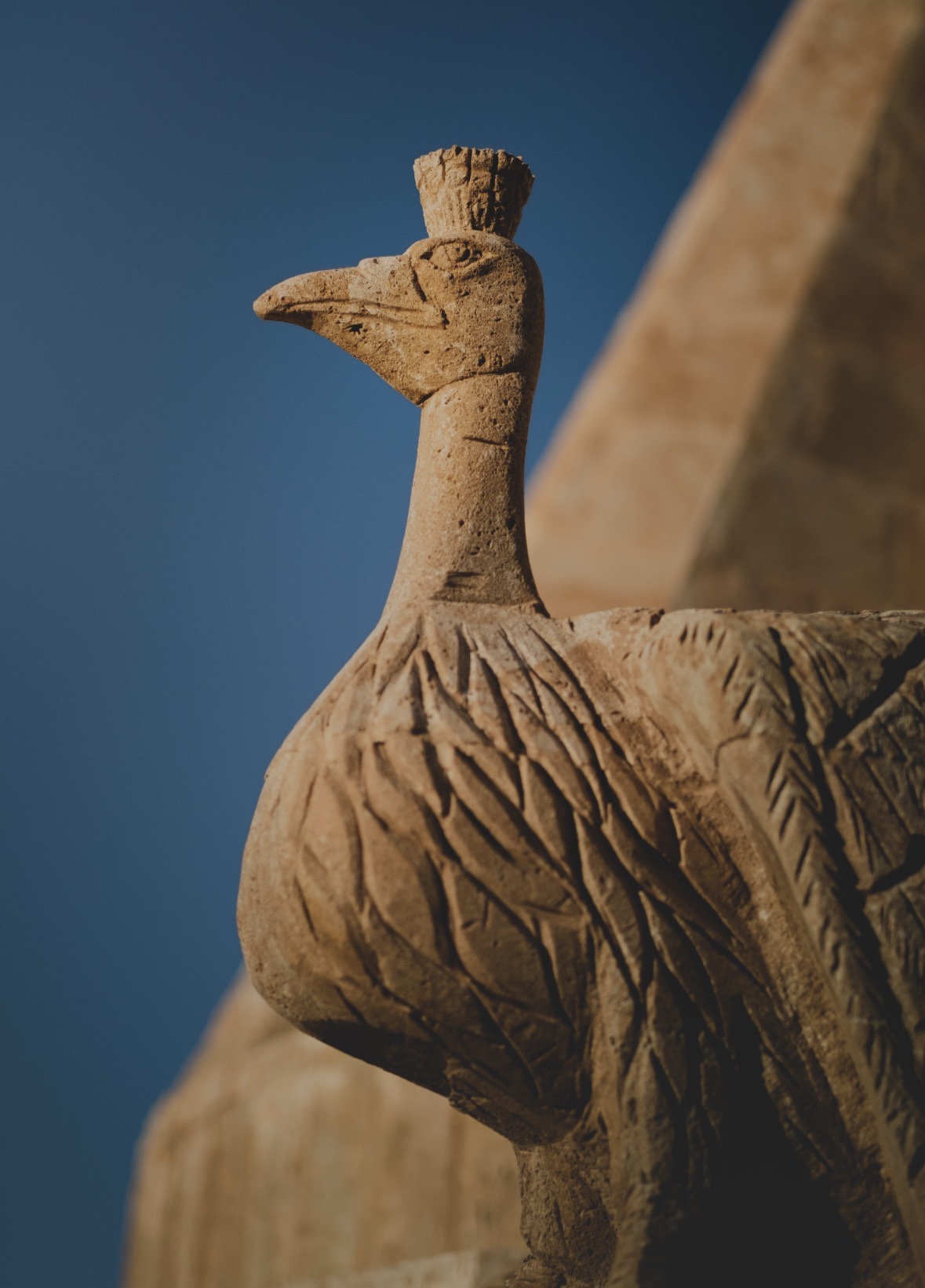
The Yazidis consider Tawûsî Melek an emanation of God who is a good, benevolent angel and leader of the archangels, who was entrusted to take care of the world after he passed a test and created the cosmos from the Cosmic egg.
Yazidis believe that Tawûsî Melek is not a source of evil or wickedness. They consider him to be the leader of the archangels, not a fallen nor a disgraced angel, but an emanation of God himself.
The Yazidis believe that the founder or reformer of their religion, Sheikh Adi Ibn Musafir, was an incarnation of Tawûsî Melek.
In Yazidi religious folk beliefs, Tawûsî Melek is described as eternal and an eternal light (Tawûsî Melek herhey ye û nûra baqî ye), and in Yazidi mythology, when Tawûsî Melek descended to earth, the seven colours of the rainbow transformed into a seven-coloured bird, the peacock, which flew around every part of earth to bless it, and its last resting place was in Lalish. Hence, in Yazidi mythology, the rainbow is linked with Tawûsî Melek and it is believed that he shows his blessing with the sign of rainbow.
The first Wednesday of Nîsan (Eastern April) every year is believed to coincide with Tawûsî Melek's descending to earth as light, bringing in the New Year with its joyous renewal of life on earth, when Nature burgeons forth anew in Spring. It therefore became the holy day upon which Sersal (Yazidi New Year) is celebrated. On the eve of the feast, 365/366 lamps are lit as the symbol of the descending of Tawûsî Melek to the earth. This number also corresponds to the number of the days in the year.
Yazidi accounts of the creation differ significantly from those of the Abrahamic religions (Judaism, Christianity, and Islam), since they are derived from the Ancient Mesopotamian and Indo-Iranian traditions; therefore, Yazidi cosmogony is closer to those of Ancient Iranian religions, Vedic Hinduism, Yarsanism and Zoroastrianism.
Source : https://en.wikipedia.org/wiki/Taw%C3%BBs%C3%AE_Melek
Well, it is very similar to Mexico flag. I thought, it had something to do with it. Or, with another flag.
It is a Flag, but not Mexico. That does get into how like Spanish and Italian Colors or whatever, are Similar to Middle Eastern, and Christmas Colors.
Very interesting! At first, because of the colors, I thought it was something related to Iran.
It is the Kurdistan Flag.
So, MELEK Taus is what we knew People would Find and it is one of the MELEK (Melech, Malak, Molech, etc) Entities that that we meant to Represent with the Name “MELEK”. And a Primary One.
So that kind of is a Symbol of the Platform and we are Open to Integrating it more.
Here is a Post about Part of why this is the Symbol:
https://melek.salon/melek/@melek/kekistan-v-kurdistan