The old manuals told the image-maker to meditate first and to see the deity described in its dhyāna verse before touching stone. The verse was the brief. Finished images were brought to life by opening their eyes. Egypt's sculptors knew a parallel rite, the Opening of the Mouth, and one of their words for sculptor meant "one who causes to live." We work in that lineage of attention. Each scene below is remade for several peoples with its sacred attributes kept intact.
Likeness to the type. The six limbs of painting include pramāṇa (measure), bhāva (feeling) and sādṛśya (likeness). In a sacred image, likeness means fidelity to the canonical type, not to a sitter. That is why a deity's weapon, gesture, mount and headdress are fixed by the texts: the attributes carry the identity. The Bṛhat Saṃhitā (6th c.) sets Yama on a buffalo with a club and puts a noose in Varuṇa's hand. (source)
We are testing these features and looking to develop them. This is Hathor's alpha work, made on our own servers — the images and videos she makes next are expected to be much better and more accurate. Tell us what works and what doesn't: every video page has 👍/👎, comments and timestamped notes.
The full gallery, every scene in every look: https://hathor.soapbox.community/remakes · Shilpa Shastra gallery: https://hathor.soapbox.community/gallery
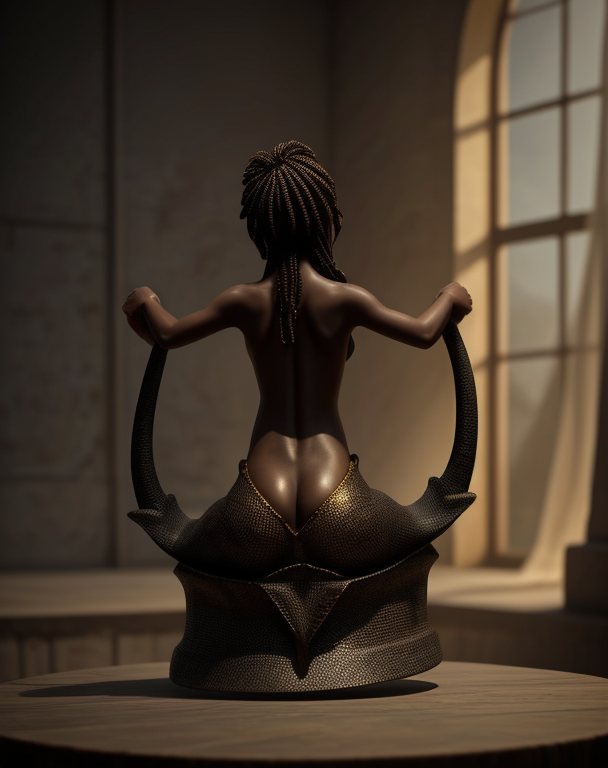
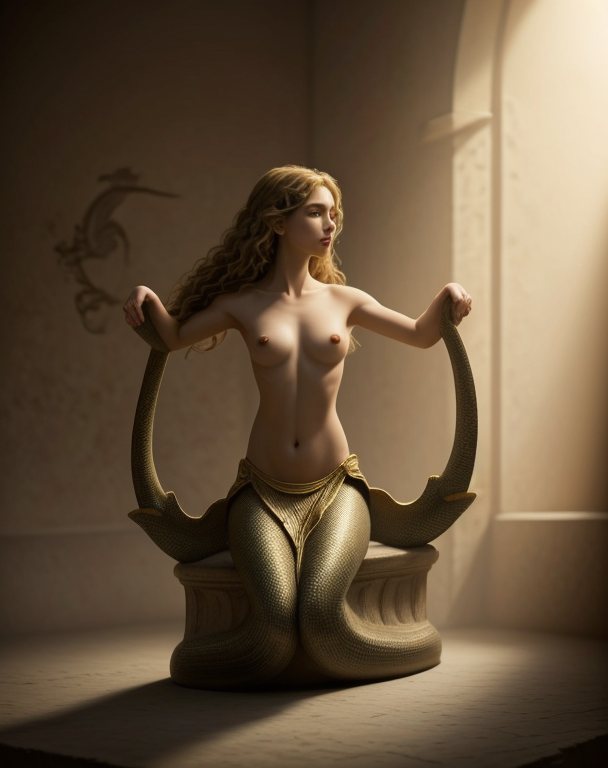
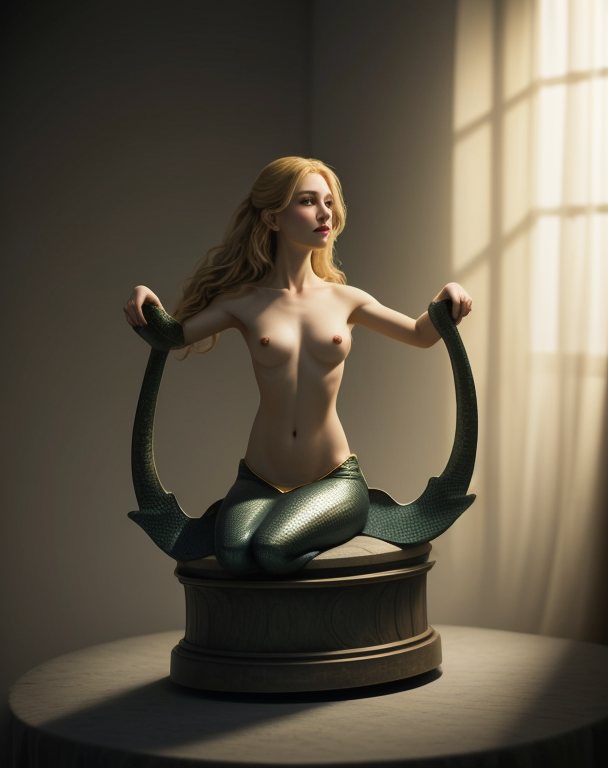
A mermaid holding her twin tails
Source: Mermaid, first half 16th century · The Metropolitan Museum of Art 32.100.174 · Open Access CC0
Original: 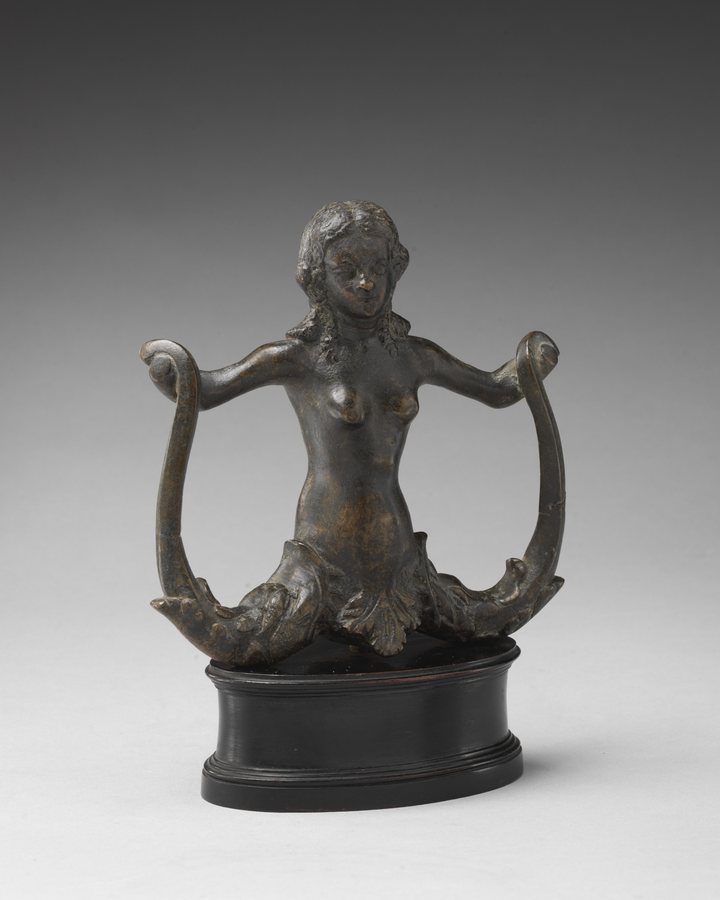
Realistic — Nubian · Libyan (Amazigh) · Levantine · Pale

A roundel of mermaids and lotus (Chandraketugarh)
Source: Roundel with Mermaids and Lotus, India, Bengal, Chandraketugarh area, Shunga period (185–78 BCE) · Cleveland Museum of Art 2010.295 · Open Access CC0
Original: 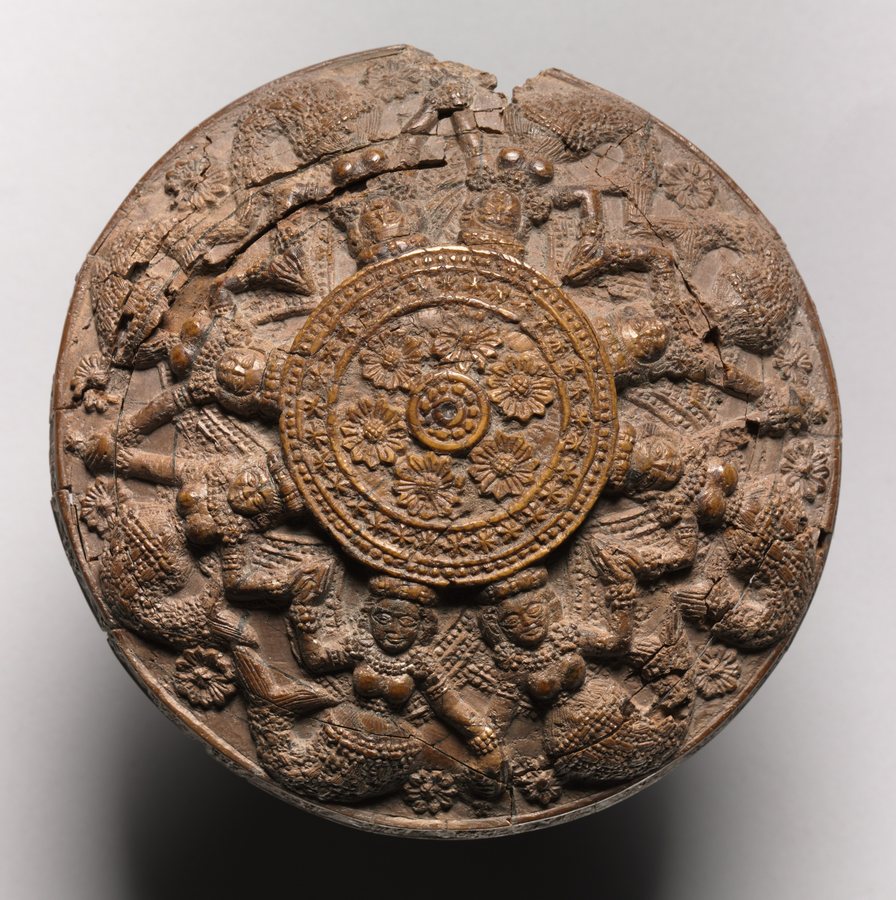
Realistic — indian · dravidian
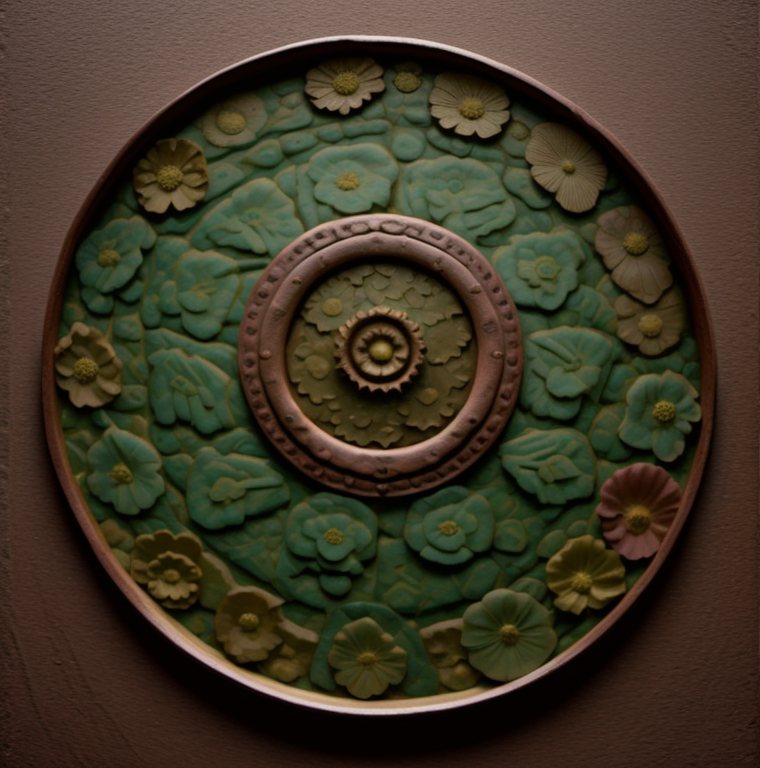
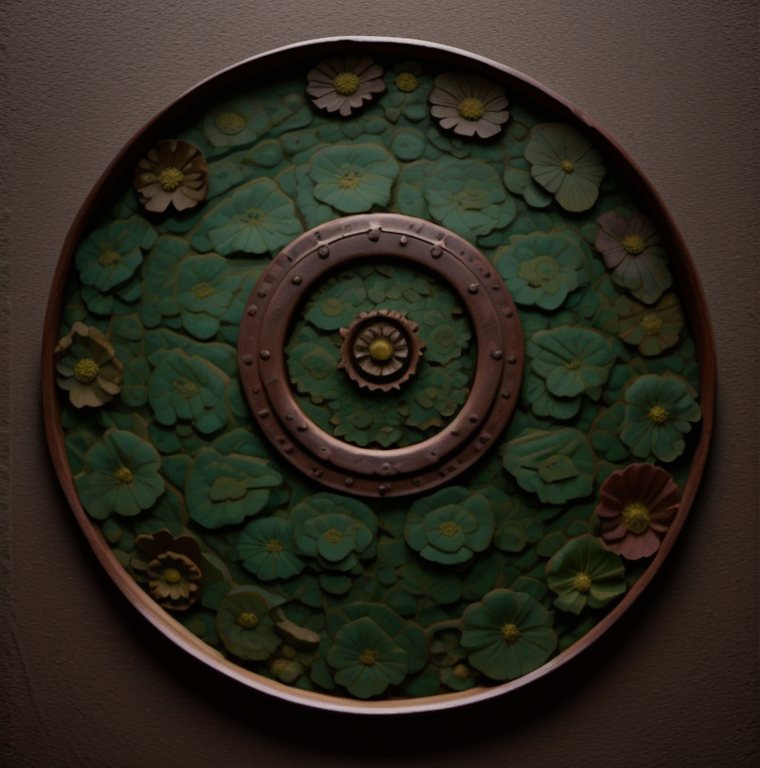
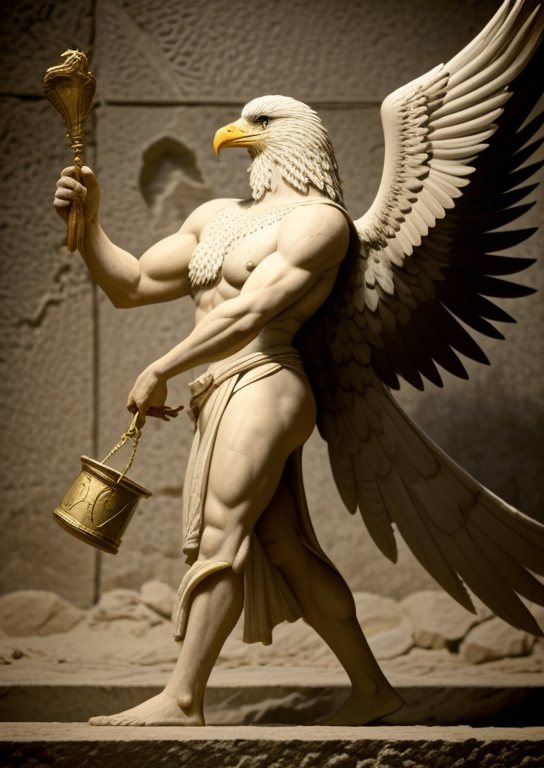
An eagle-headed apkallu (Nimrud)
Source: Relief panel, Assyrian, ca. 883–859 BCE · The Metropolitan Museum of Art 32.143.7 · Open Access CC0
Original: 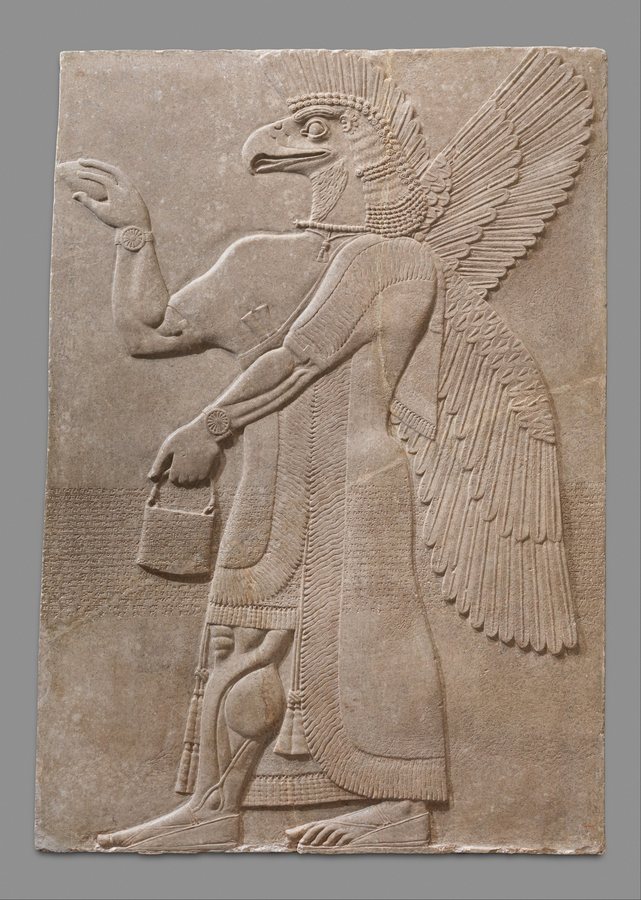
Realistic — As depicted
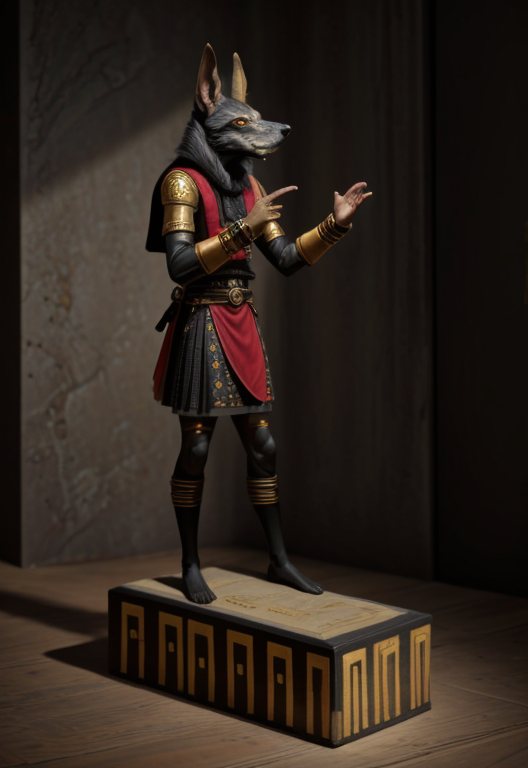
Anubis, the jackal-headed god
Source: Statuette of a canid-headed god, probably Anubis, Ptolemaic Period, 332–30 BCE · The Metropolitan Museum of Art 38.5 · Open Access CC0
Original: 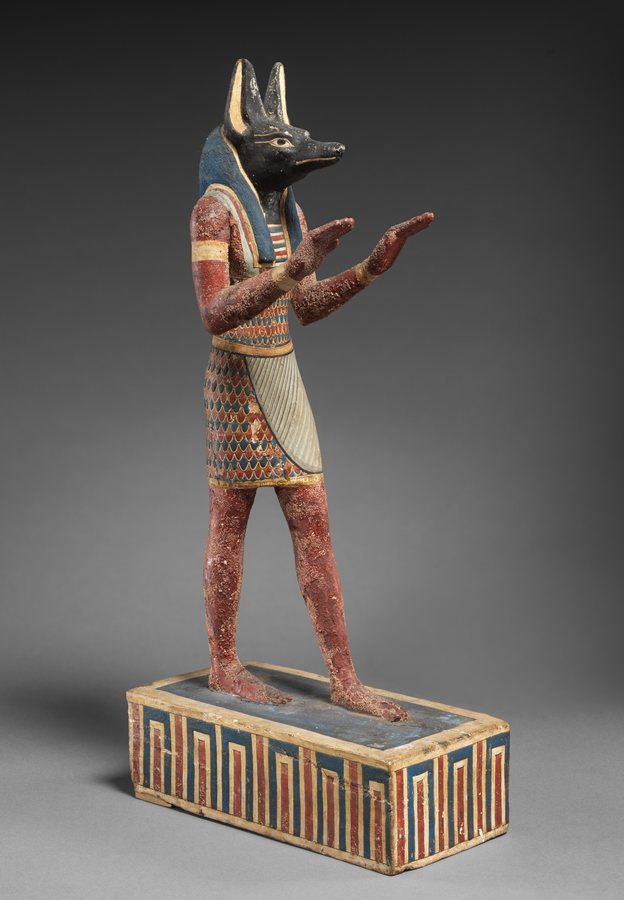
Realistic — As depicted
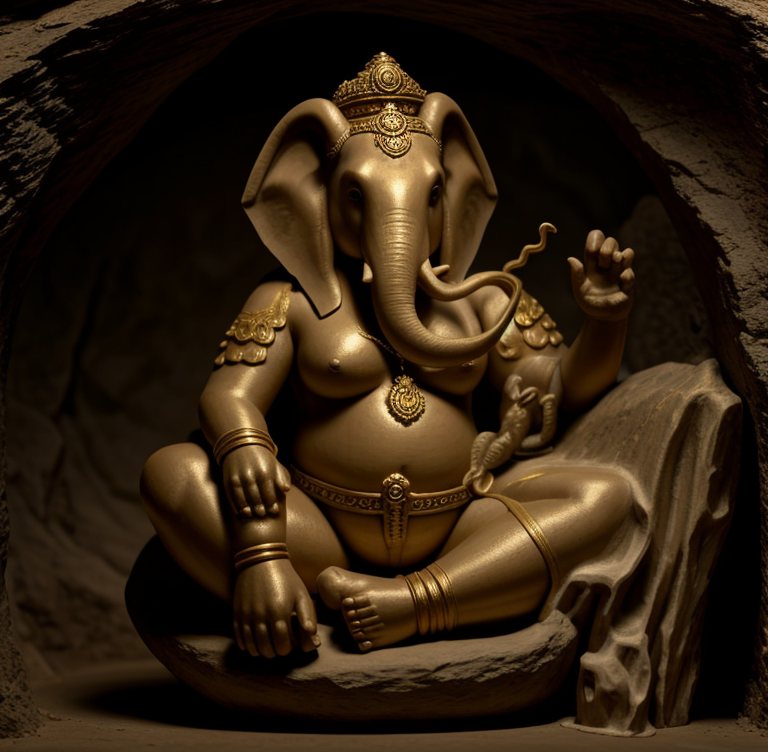
Ganesha in the cave at Ellora
Source: Ellora Caves, Cave 17 · photo Vu2sga · CC BY-SA 4.0 · Wikimedia Commons
Original: 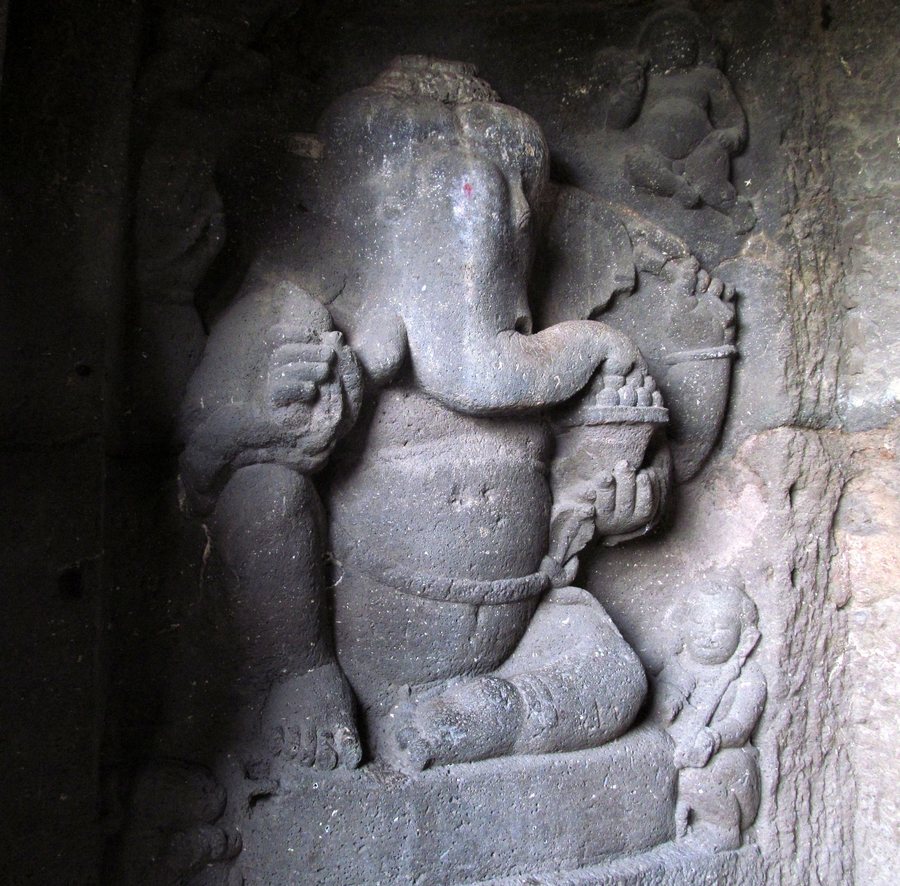
Realistic — As depicted
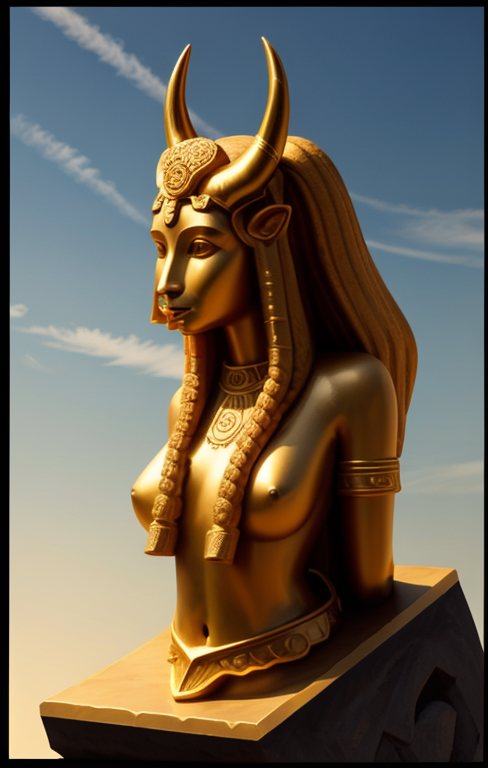
Hathor as the divine cow shelters the king
Source: Hathor shrine of Thutmose III, Deir el-Bahari, Egyptian Museum Cairo · photo from Naville's excavation · Public domain · Wikimedia Commons
Original: 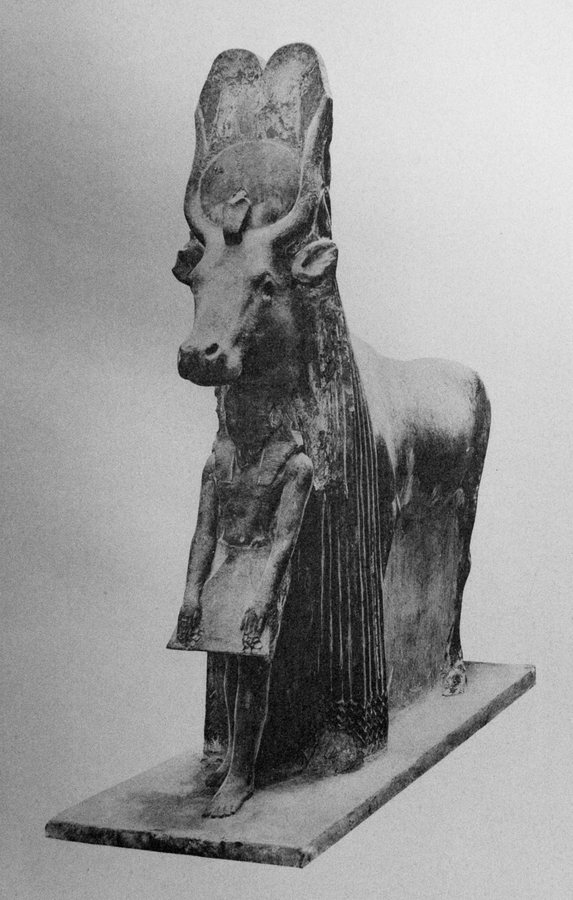
Realistic — As depicted
Kinnaras playing music (Borobudur)
Source: relief from Borobudur, 9th century · photo Kassian Céphas (1845–1912) · Public domain · Wikimedia Commons
Original: 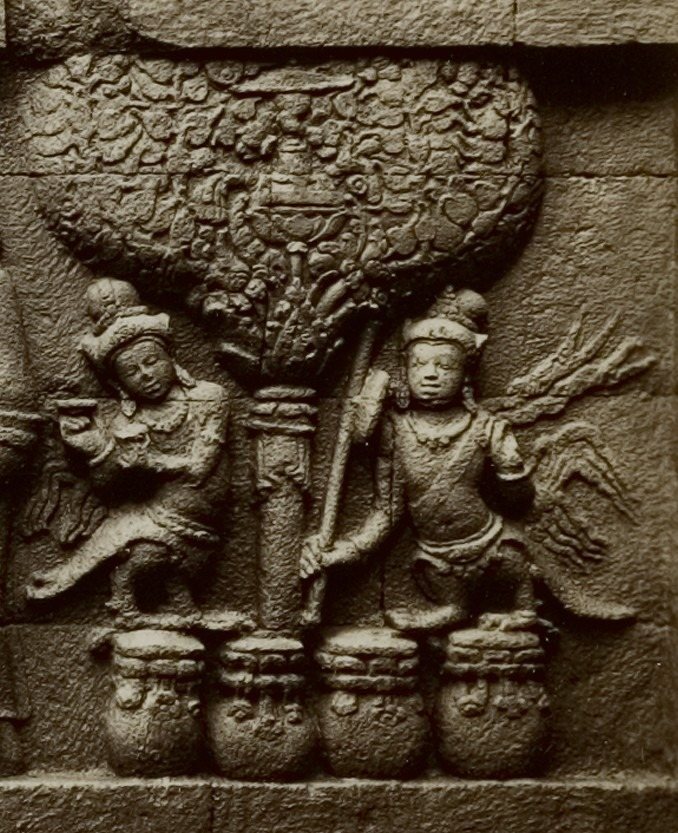
Realistic — As depicted
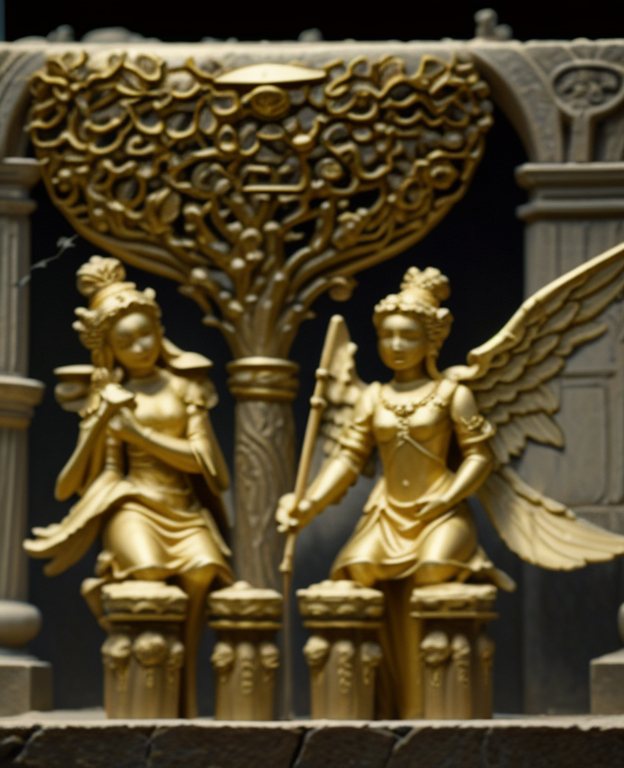
Sekhmet, the lioness-headed goddess
Source: Statuette of Sekhmet, Egypt, Late period (715–332 BCE), Dynasty 26 or later · Cleveland Museum of Art 1940.669 · Open Access CC0
Original: 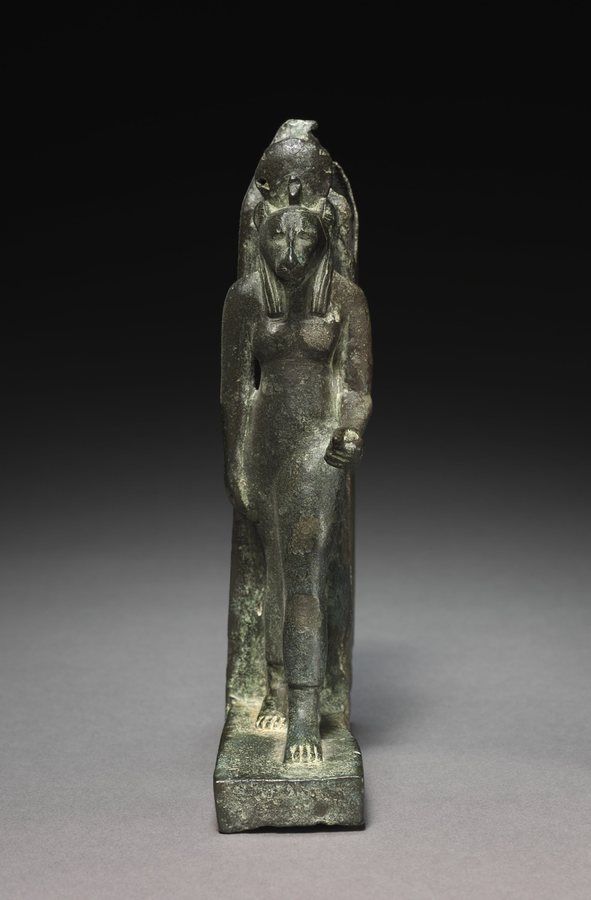
Realistic — As depicted
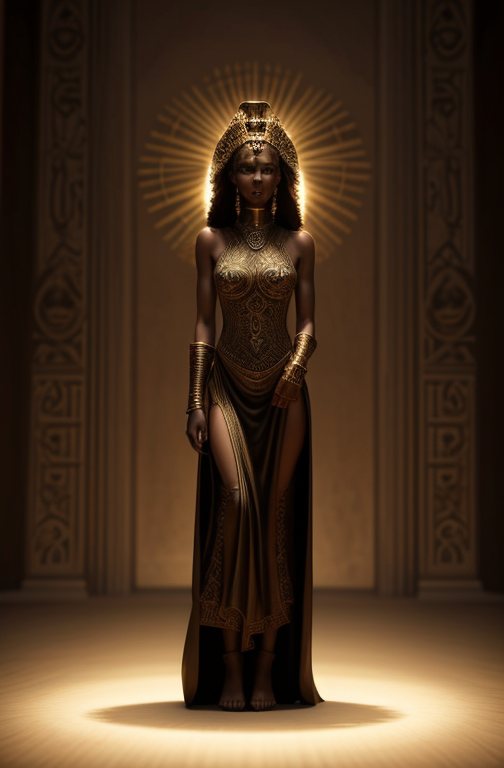
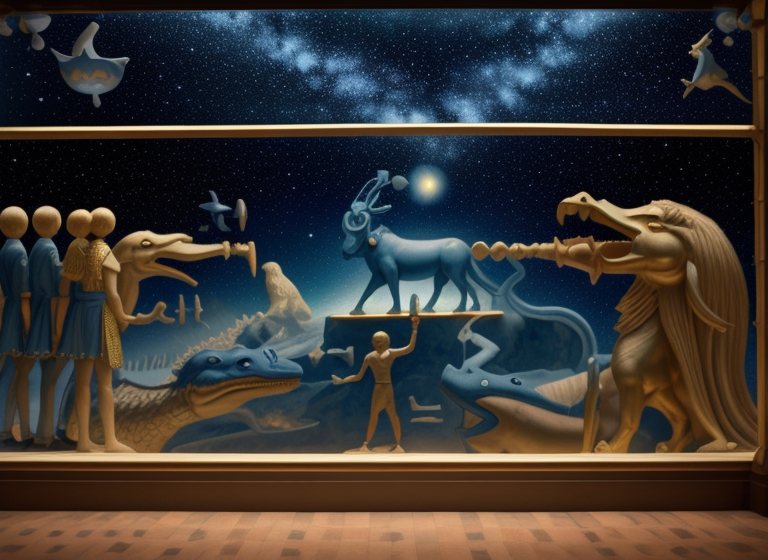
Taweret and the constellations (tomb of Seti I)
Source: tomb of Seti I (KV17), Valley of the Kings · photo Jean-Pierre Dalbéra · CC BY 2.0 · Wikimedia Commons
Original: 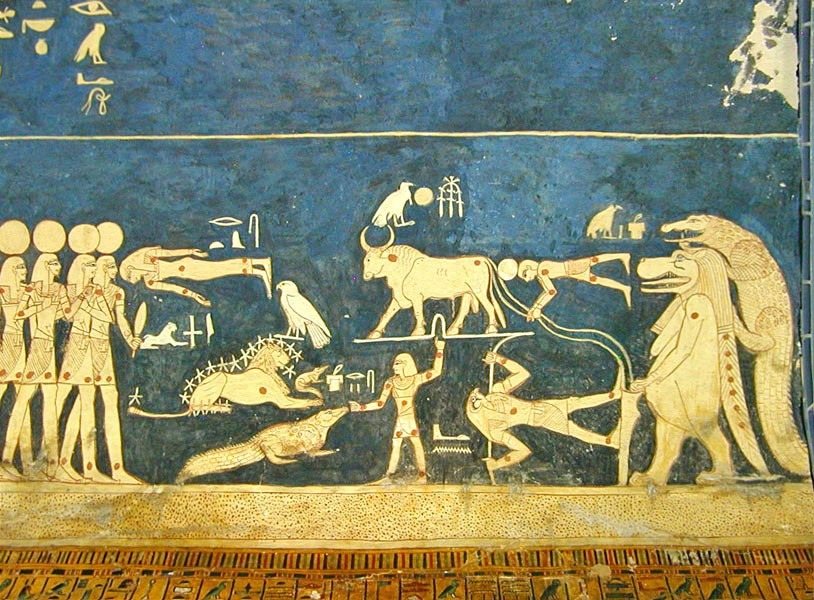
Realistic — As depicted
The Buddha sheltered by the seven-headed naga
Source: Buddha Protected by a Seven-headed Naga, Cambodia, late 12th–early 13th century · The Metropolitan Museum of Art 36.96.5 · Open Access CC0
Original: 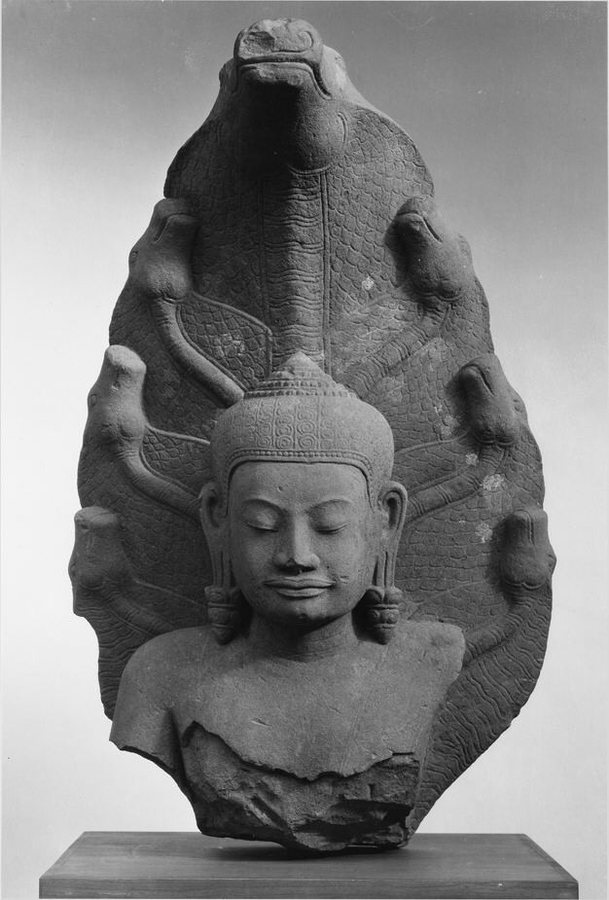
Realistic — As depicted

The animal-headed gods of the Nesptah stele
Source: Tomb Stele of Nesptah, Egypt, Late period (715–332 BCE), Dynasty 26 · Cleveland Museum of Art 1921.1721 · Open Access CC0 · cropped to the scene
Original: 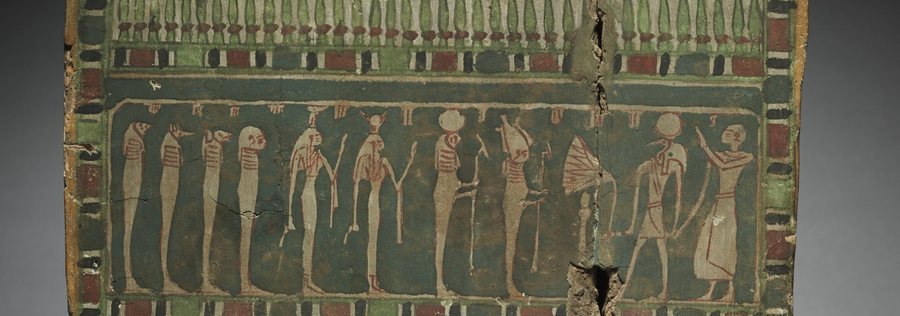
Realistic — As depicted

The lamassu of Khorsabad
Source: human-headed winged bull from the palace of Sargon II, Khorsabad, Louvre · Public domain · Wikimedia Commons
Original: 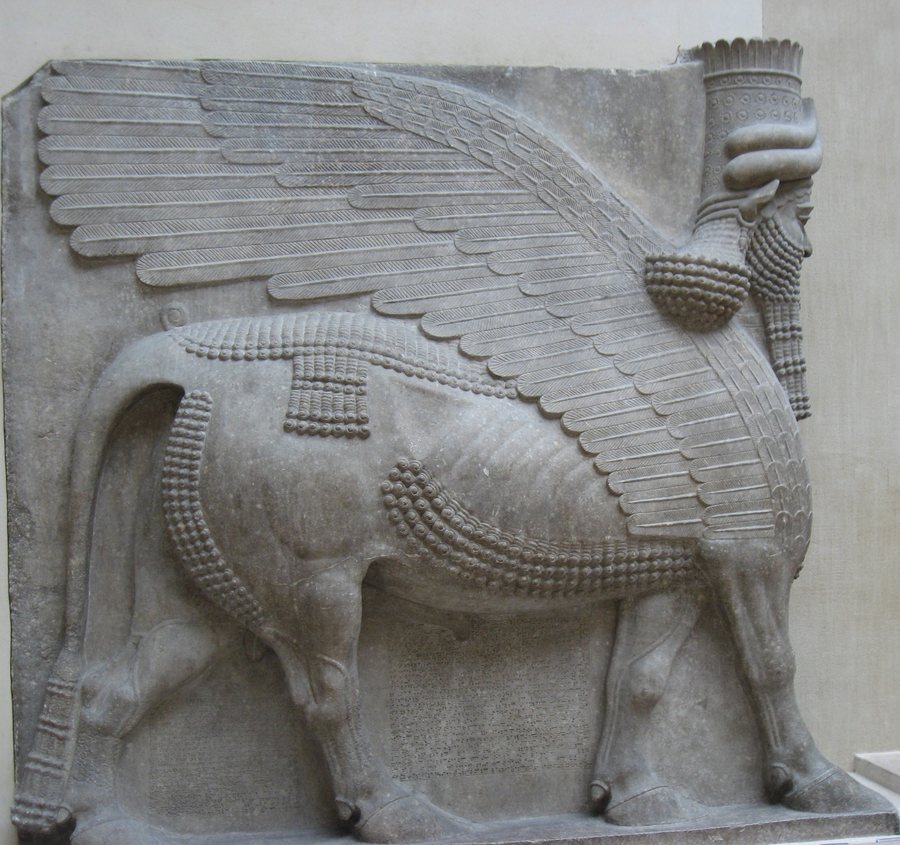
Realistic — As depicted
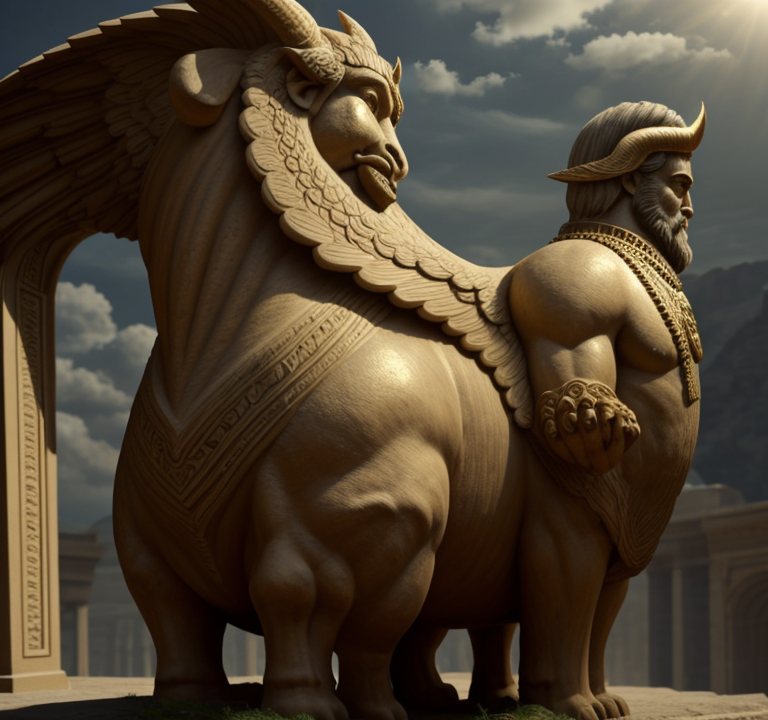
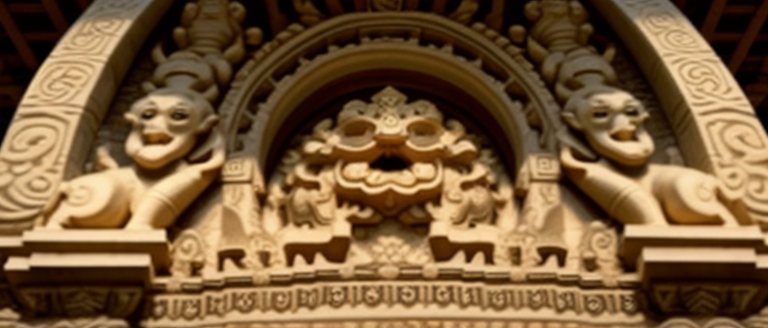
The makara arch of Chennakesava
Source: Chennakesava Temple, Belur · photo Rohit14400 · CC BY-SA 4.0 · Wikimedia Commons
Original: 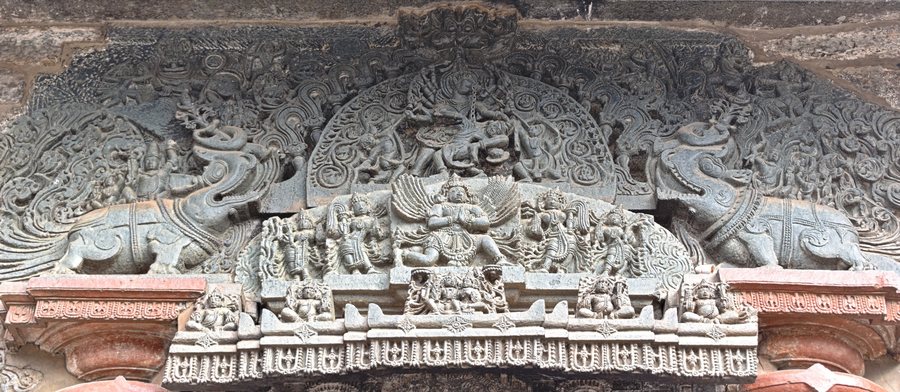
Realistic — As depicted
The sphinx of Queen Hatshepsut
Source: Sphinx of Hatshepsut, New Kingdom, ca. 1473–1458 BCE · The Metropolitan Museum of Art 31.3.166 · Open Access CC0 · cropped to the scene
Original: 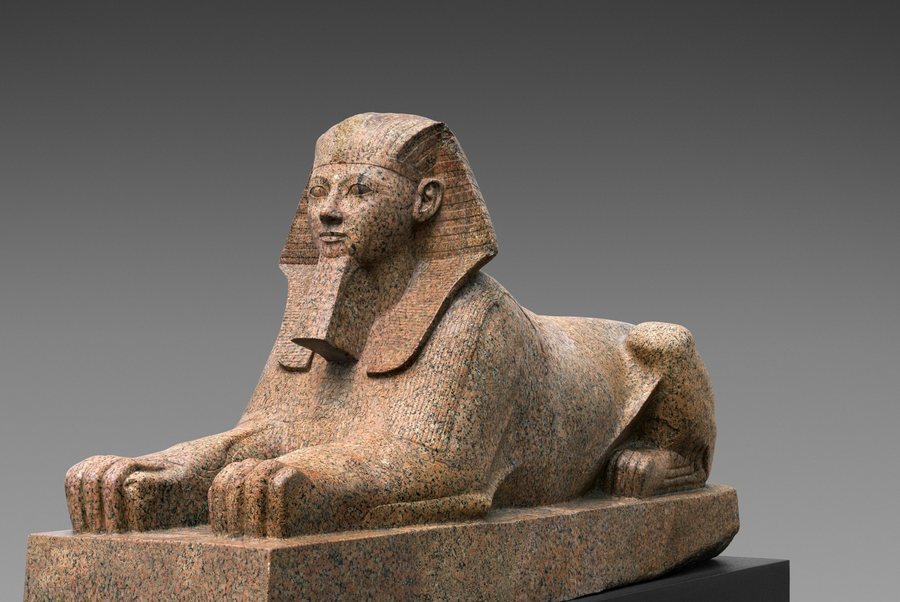
Realistic — As depicted
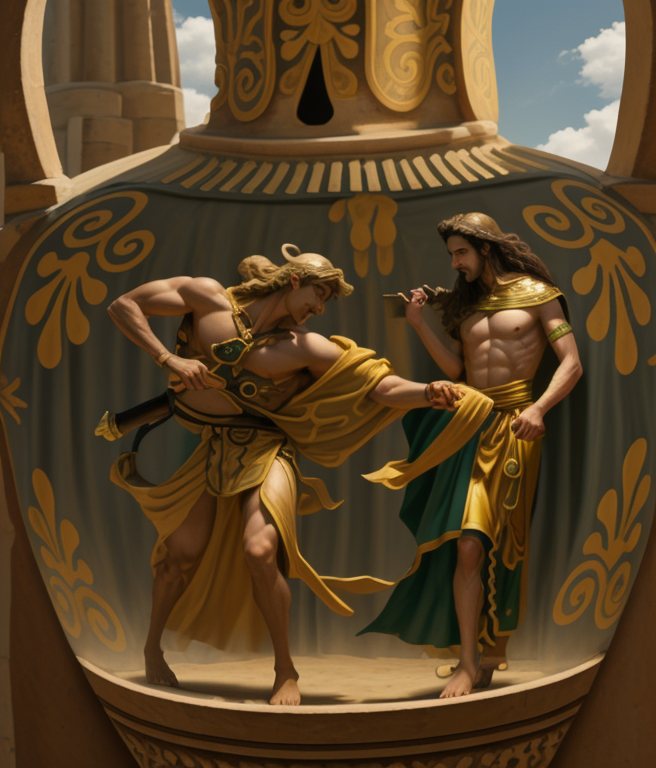
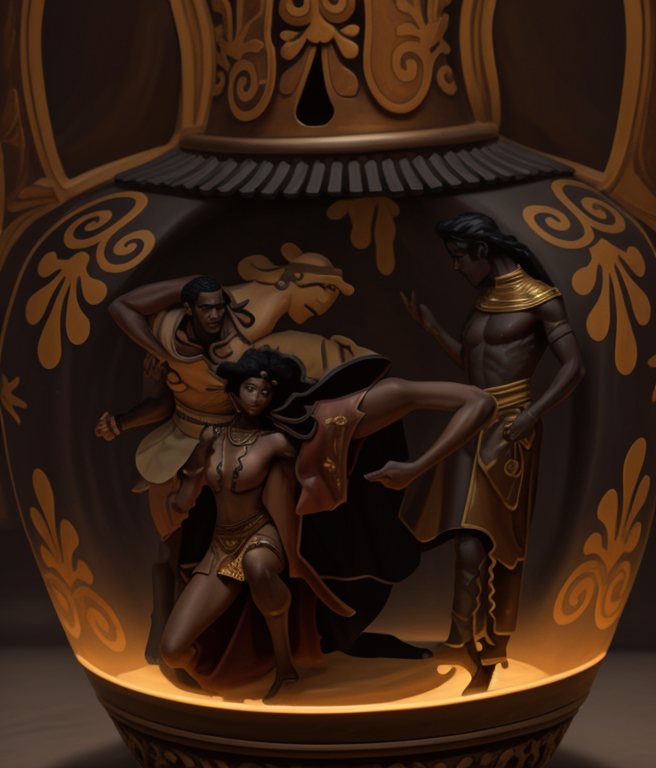
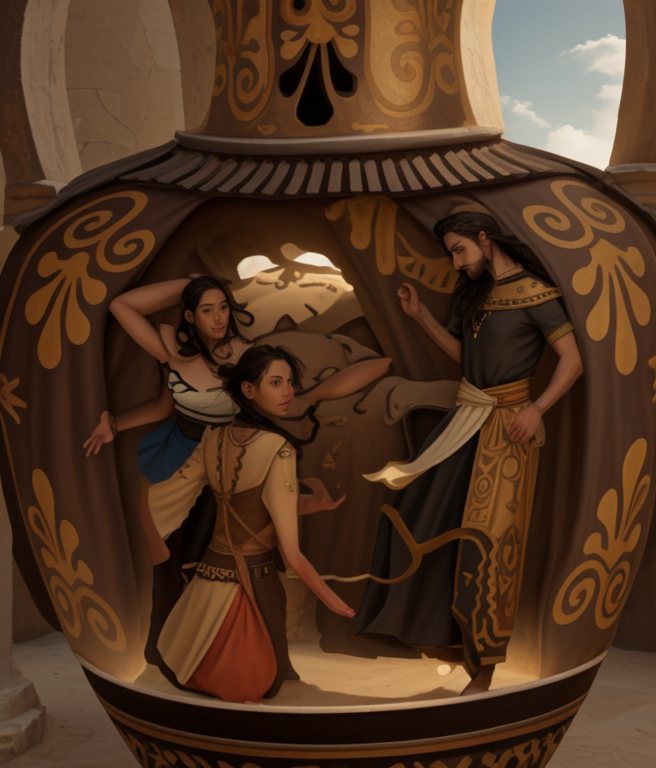
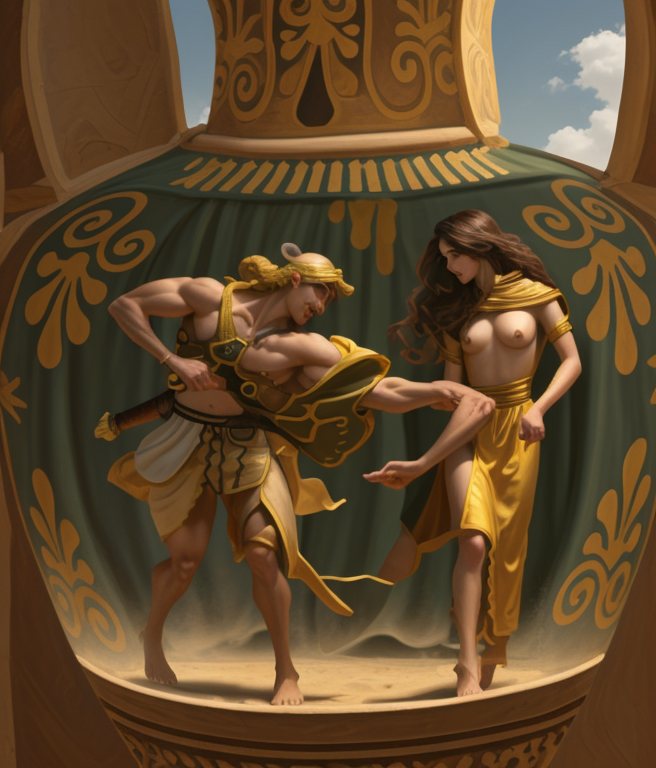
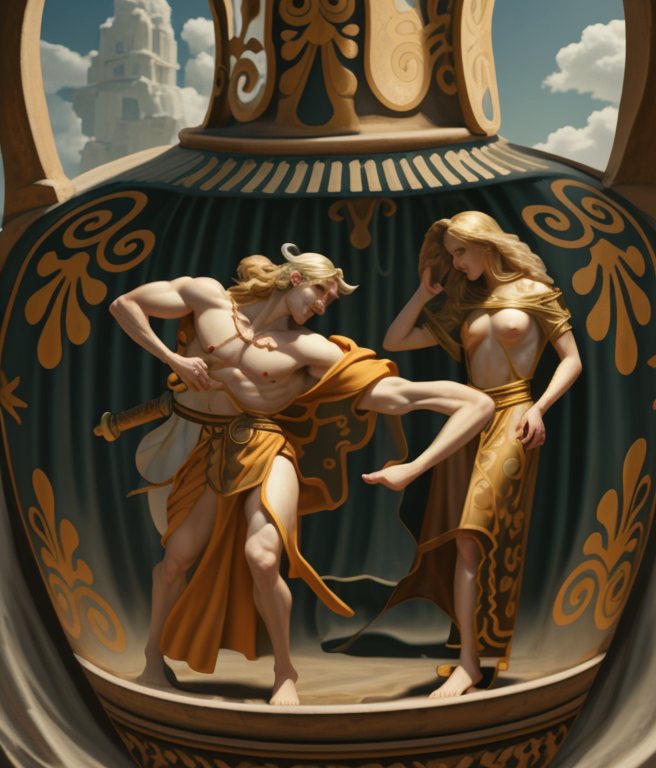
Theseus kills the Minotaur (black-figure amphora)
Source: Edinburgh Painter, Terracotta neck-amphora (jar), Greek, Attic, ca. 500 BCE · The Metropolitan Museum of Art 21.88.92 · Open Access CC0 · cropped to the scene
Original: 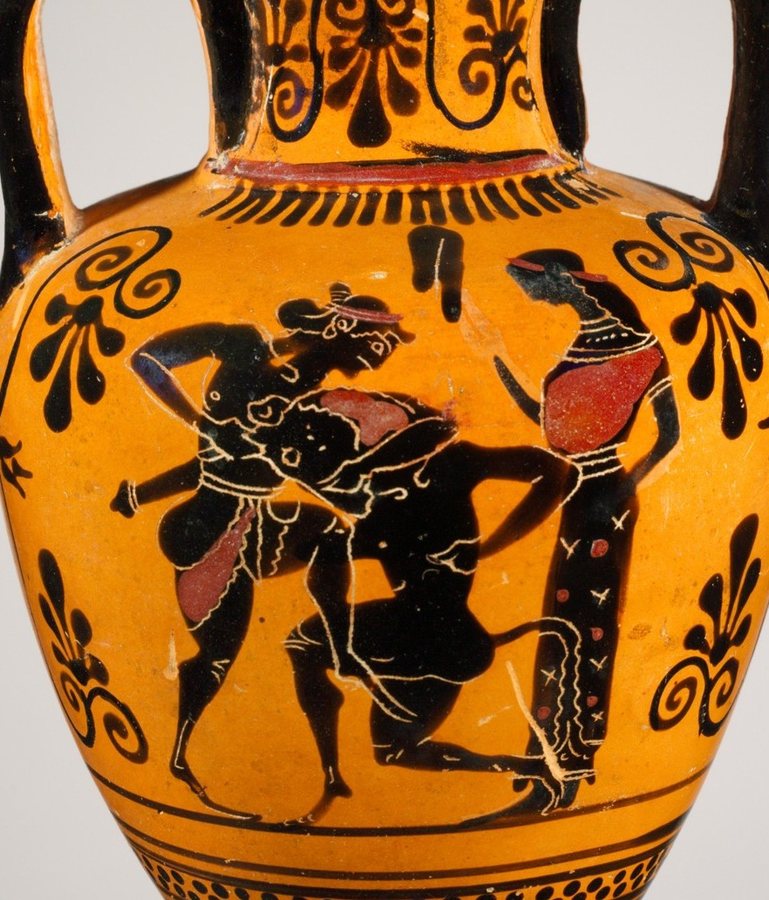
Realistic — Greek · Nubian · Libyan (Amazigh) · Levantine · Pale
Thoth, the ibis-headed god
Source: Striding Thoth, Ptolemaic Period, 332–30 BCE · The Metropolitan Museum of Art 26.7.860 · Open Access CC0
Original: 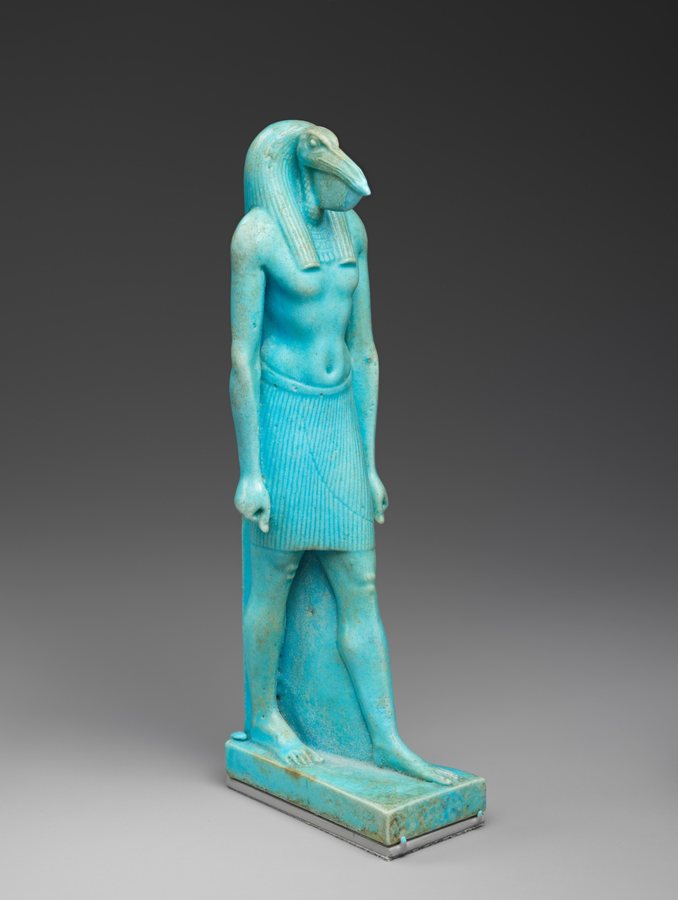
Realistic — As depicted
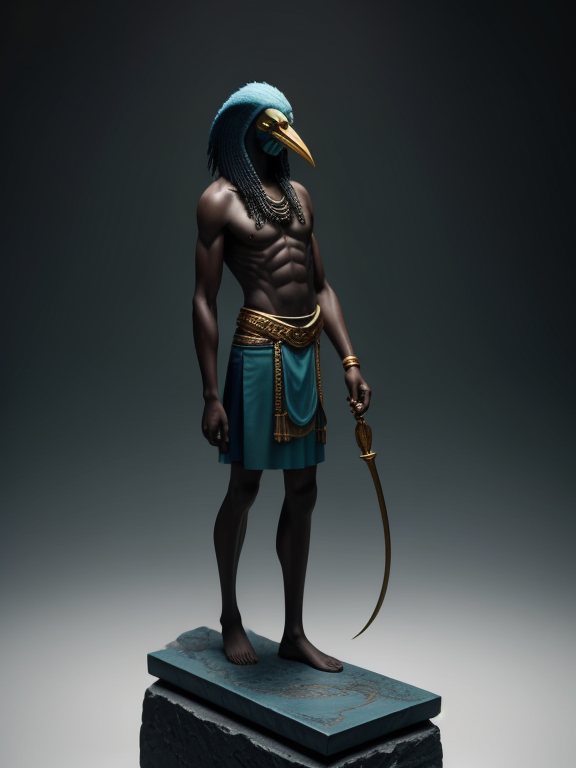
Vishnu riding on Garuda
Source: Vishnu Riding on Garuda, Eastern India, Bihar · Cleveland Museum of Art 1961.46 · Open Access CC0
Original: 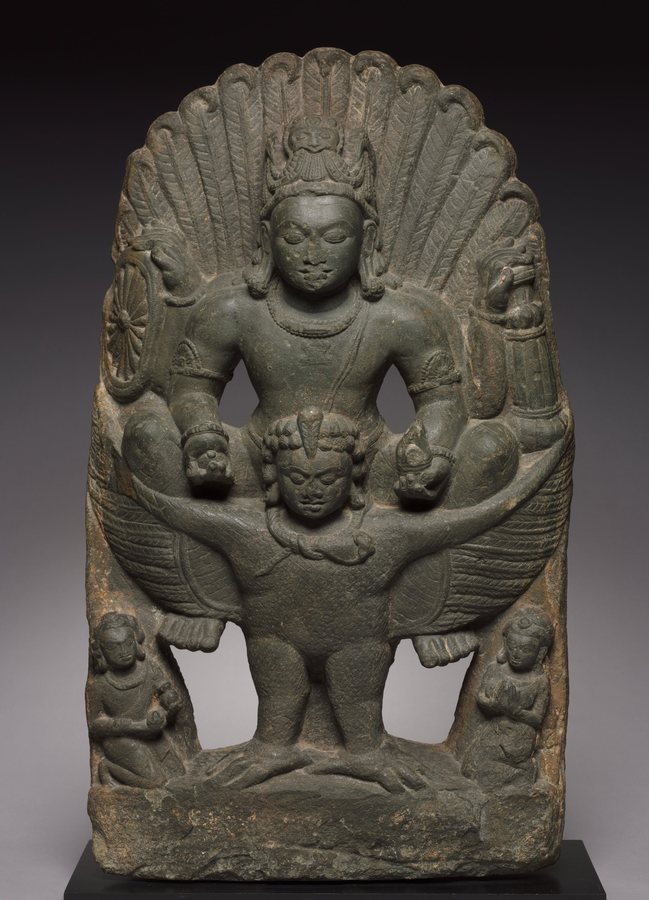
Realistic — As depicted
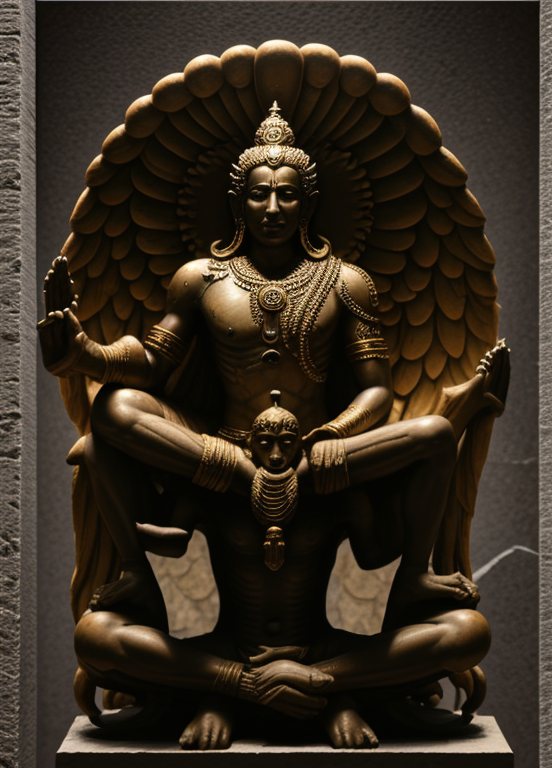
Vishnu with Garuda and Lakshmi
Source: Vishnu Accompanied by Garuda and Lakshmi, South India (Telangana, Kalyani district), 12th–13th century · The Metropolitan Museum of Art 57.51.2 · Open Access CC0
Original: 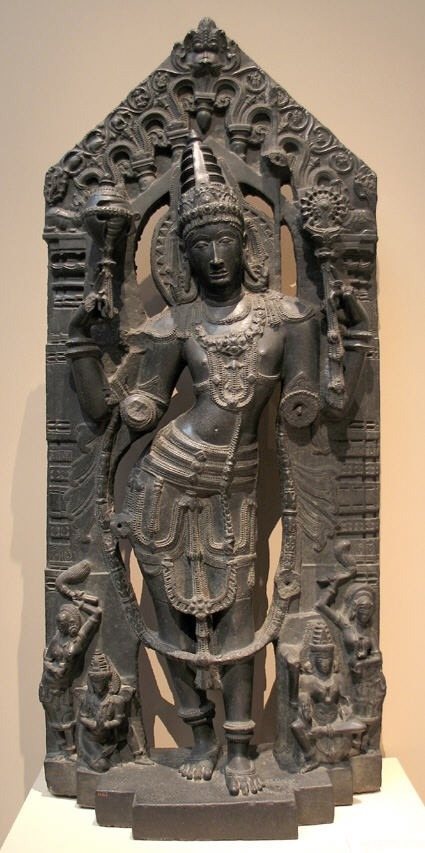
Realistic — As depicted
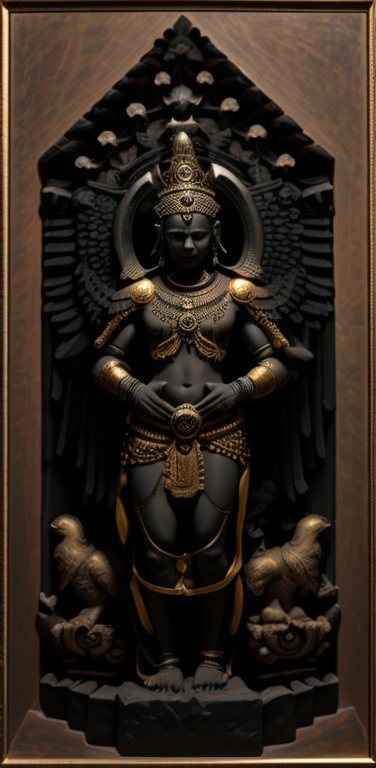
All 18 scenes in this set, and every other remake, are in the gallery: https://hathor.soapbox.community/remakes. Made on our own servers in Hathor Studio; each scene links to its place in the gallery.