Hathor’s reference library: the crowns, weapons, armour, chariots, regalia, objects, landscapes and people that the remakes, the animations and the 3D scenes are assembled out of. Every piece was rendered on our own servers from the record kept with it, and where a museum photograph on Wikimedia Commons was the reference, that file, its licence and its photographer are credited under the render.
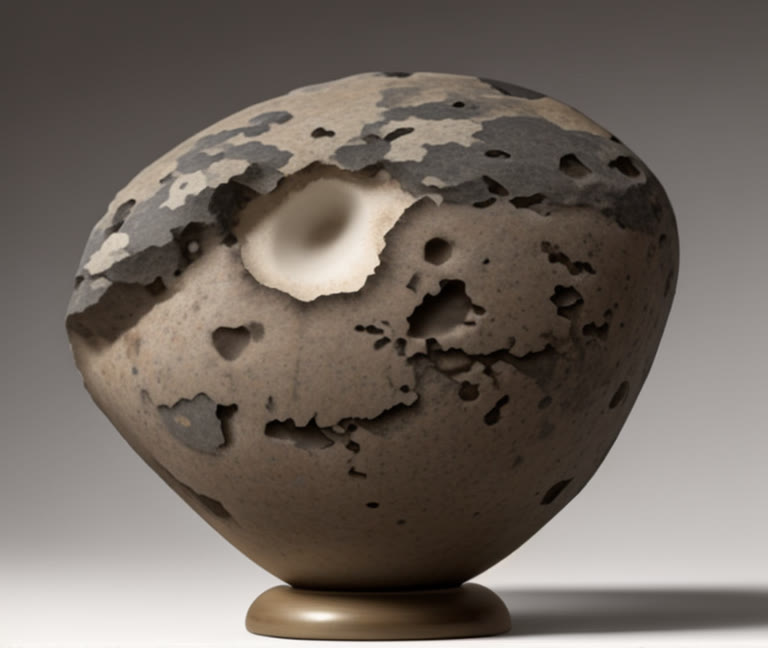
Pear-shaped (piriform) mace
Naqada II to Early Dynastic
Predynastic granodiorite pear-shaped (piriform) mace head (Museo Egizio Turin S 577), three-quarter top view: broad rounded top with shaft hole, tapering to a narrower base.
From the record: Rounded pear-shaped mace heads replaced the disc mace in Naqada II (3600-3250 BCE); calcite and other stones; the royal smiting weapon.
Reference photograph: Mace head Granodiorite - Museo Egizio, Turin S 577 p01.jpg — CC0, Museo Egizio (Wikimedia Commons)
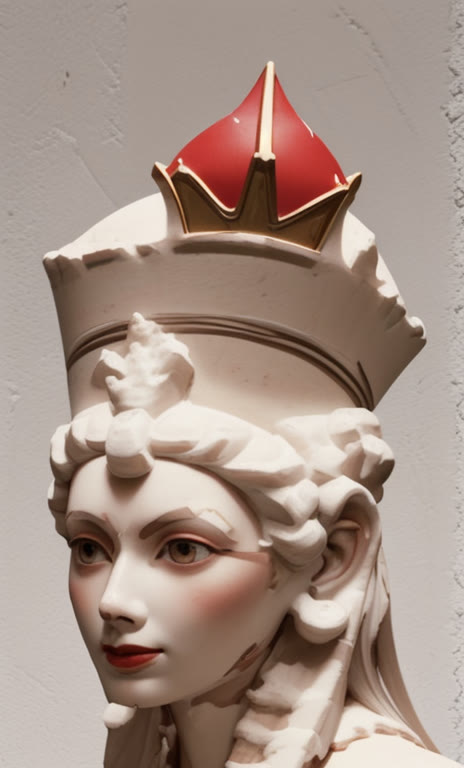
Pschent (Double Crown)
from mid-1st Dynasty to Ptolemaic
Painted limestone head from an Osiride statue of Hatshepsut (Met Museum): the Pschent double crown — the white bulbed Hedjet rising out of the flat-rimmed Deshret, traces of red paint.
From the record: The red and white crowns combined with uraeus and vulture; first documented in the middle of the First Dynasty; Ptolemy VI is shown wearing it.
Reference photograph: Head from an Osiride Statue of Hatshepsut MET 21M CAT074R4.jpg — CC0, This file was donated to Wikimedia Commons as part of a project by the Metropolitan Museum of Art. See the Image and Data Resources Open Access Policy (Wikimedia Commons)
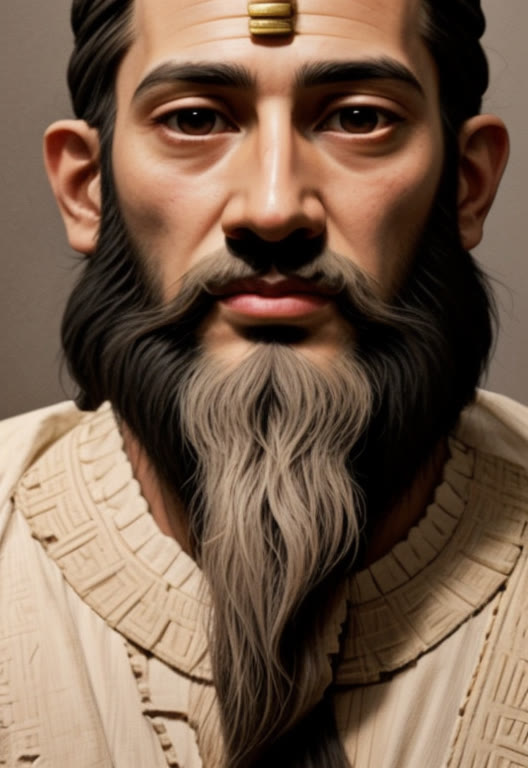
Royal false beard
all eras
Red granite statue of Amenhotep II (Luxor Museum), face and chin: the long rectangular royal false beard hanging from the chin, with chin-strap line along the jaw.
From the record: Plaited ceremonial beard of the king; Tutankhamun's mask beard weighs 2.5 kg with blue glass inlay; Hatshepsut is shown with one.
Reference photograph: Luxor Museum Statue Amenophis II. 01 (cropped).jpg — CC BY 3.0, Olaf Tausch; Own work (Wikimedia Commons)
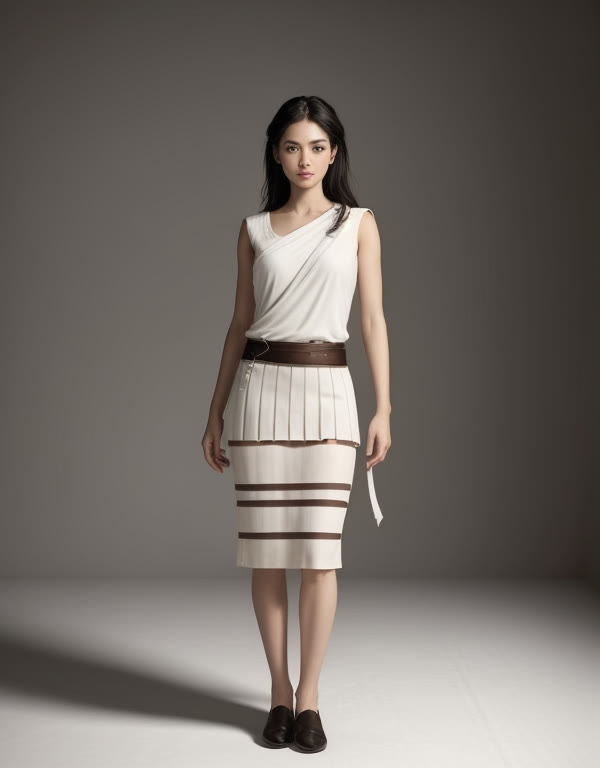
Royal shendyt kilt
all eras
Greywacke triad of Menkaure (Egyptian Museum Cairo), waist and thighs of the king: the pleated royal Shendyt kilt with belt and central trapezoidal front tab.
From the record: Linen wrap kilt worn to above the knee by pharaohs, gods and soldiers; finer materials for higher rank.
Reference photograph: Ägyptisches Museum Kairo 2019-11-09 Mykerinos 032.jpg — CC BY-SA 4.0, Ismoon (talk) 18:04, 23 May 2020 (UTC); Own with Photoshop, File:Ägyptisches Museum Kairo 2019-11-09 Mykerinos 03.jpg cropped and corrected (Wikimedia Commons)
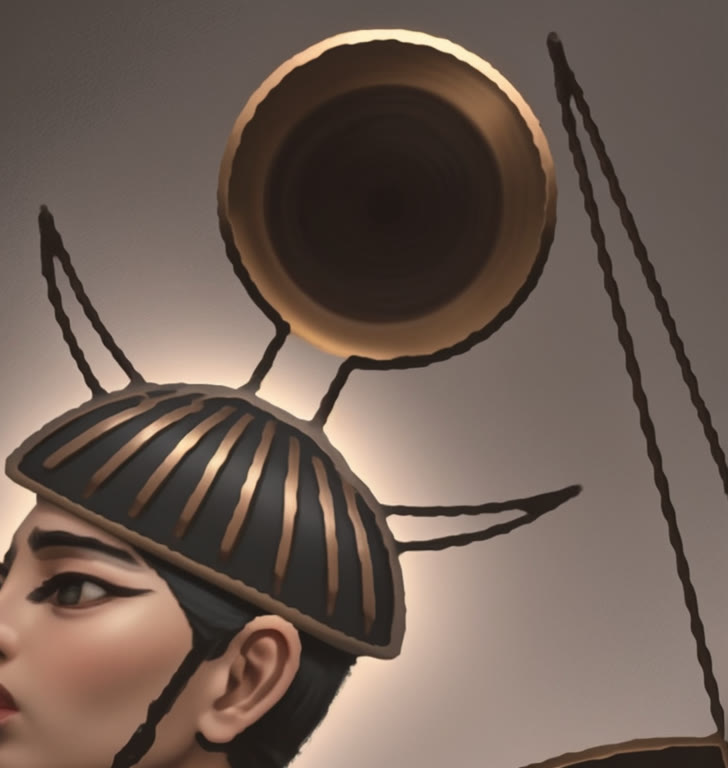
Sherden horned helmet
19th-20th Dynasty
Drawing after Rosellini of a Sherden bodyguard of Ramesses II (Abu Simbel): the horned helmet with a disc on a short stalk at the crest, ribbed cap.
From the record: Egyptian reliefs show Sherden in horned helmets with a circular ornament at the crest; Ramesses II's bodyguard were 'conspicuous by their horned helmets'.
Reference photograph: 2 of Ramesses II's Sherden bodyguards 01.jpg — Public domain, James Henry Breasted (1865-1935); Internet Archive book: The Monuments of Sudanese Nubia, vol. I, 1908 https://archive.org/details/monumentsofsudan01breauoft/page/3/mode/1up (Wikimedia Commons)
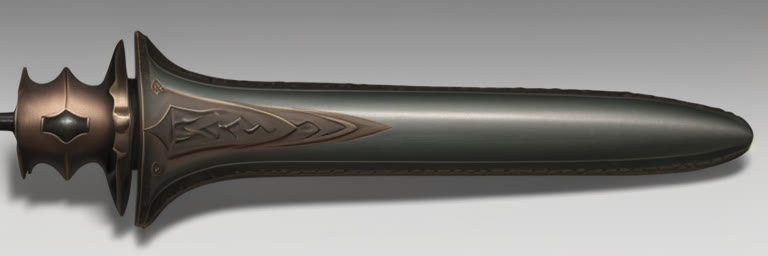
Sherden long sword
19th-20th Dynasty
A real Late Bronze Age Naue II-type flange-hilted sword (Griffzungenschwert, European find) — the sword type the Sherden long swords in Egyptian reliefs are thought to be; not itself a Sherden-attributed object.
From the record: Egyptian reliefs show the Sherden with long swords, possibly of the Naue II type.
Reference photograph: 02024 Griffzungenschwert.jpg — CC BY-SA 4.0, unknown; https://wmuzeach.pl/wszystkie-obiekty/SuQ9Ev0sMm4ntFzzFB1l_miecz-ze-sztaba-do-rekojesci- (Wikimedia Commons)
Sources: 1
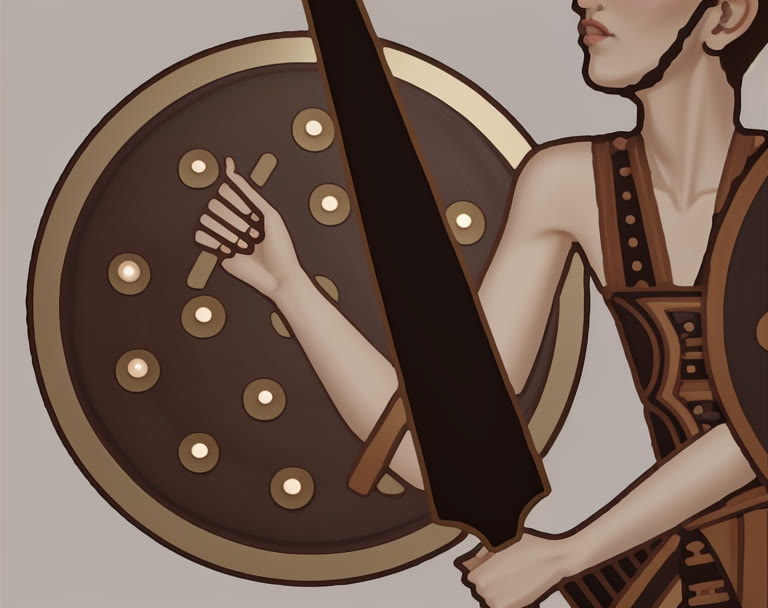
Sherden round shield
19th-20th Dynasty
Drawing after Rosellini of Ramesses II's Sherden bodyguard (Abu Simbel): the round Sherden shield, dark face studded with circular bosses, light rim, held on the arm.
From the record: Round shields are consistently shown with the Sherden in Egyptian reliefs.
Reference photograph: 2 of Ramesses II's Sherden bodyguards 01.jpg — Public domain, James Henry Breasted (1865-1935); Internet Archive book: The Monuments of Sudanese Nubia, vol. I, 1908 https://archive.org/details/monumentsofsudan01breauoft/page/3/mode/1up (Wikimedia Commons)
Sources: 1
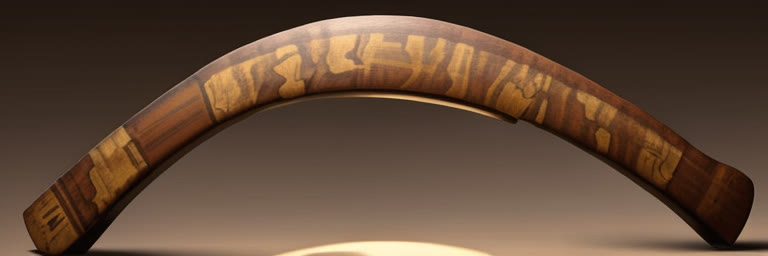
Throwstick
all eras
A wooden throwstick from the tomb of Tutankhamun (top one of four displayed together): long flattened curved stick, partly bark-covered.
From the record: Throwsticks were among New Kingdom infantry weapons; a throwstick classifier marks foreign people in the Beni Hasan caption.
Reference photograph: 4 boomerangs du tombeau de Toutânkhamon.jpg — CC BY-SA 4.0, Suaudeau; Own work (Wikimedia Commons)
What the library feeds: the remakes gallery · the animation lab · Hathor Studio.