Hathor’s reference library: the crowns, weapons, armour, chariots, regalia, objects, landscapes and people that the remakes, the animations and the 3D scenes are assembled out of. Every piece was rendered on our own servers from the record kept with it, and where a museum photograph on Wikimedia Commons was the reference, that file, its licence and its photographer are credited under the render.
Hedjet (White Crown of Upper Egypt)
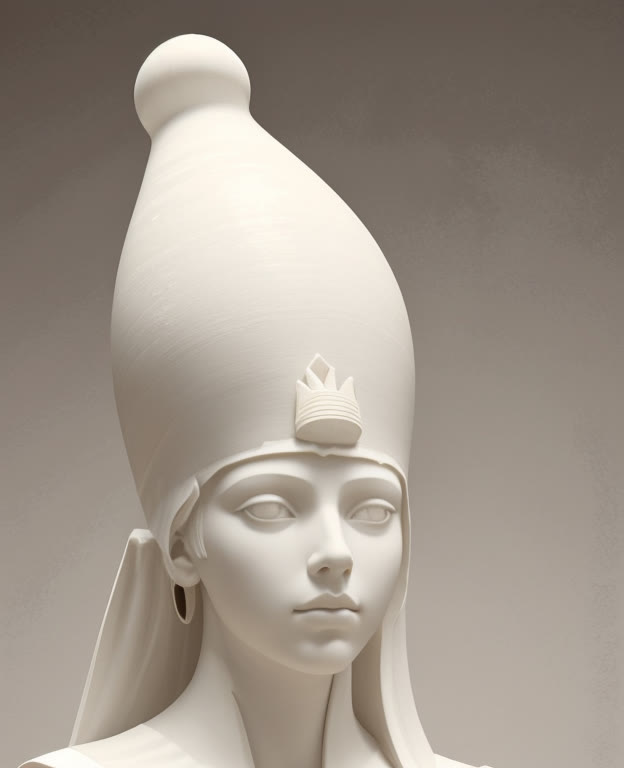
Early Dynastic onward
Painted cedar statuette of Senusret I (Egyptian Museum Cairo JE 44951), head and shoulders: tall white bulbed Hedjet crown, painted white gesso over wood.
From the record: The bulbed white crown of Upper Egypt, worn by pharaohs and by Horus and Nekhbet; Narmer wears it on one face of the Narmer Palette.
Reference photograph: Senwosret (Senusret) I Statuette, Painted Cedar with Gesso, Dynasty 12, Lisht, JE 44951, Egyptian Museum, Cairo (2).jpg — CC BY-SA 4.0, tobeytravels; https://www.flickr.com/photos/tobeyfootsteps/52212555235/ (Wikimedia Commons)
Hemhem crown
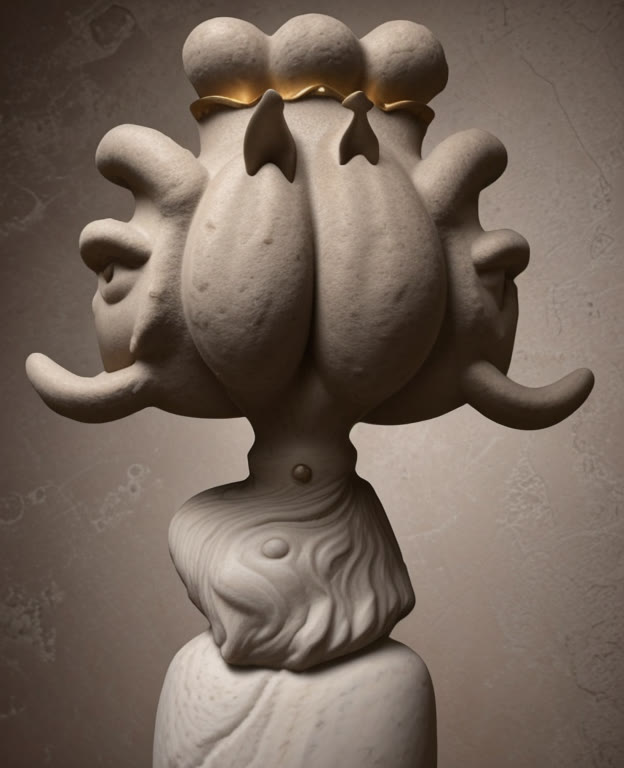
New Kingdom and later
Bronze statuette of a child god (Harpocrates) wearing the Hemhem crown over a nemes (Met Museum 64.77), head and crown: triple atef bundle with sun discs, ostrich plumes and uraei, on long horizontal ram horns.
From the record: Composite crown of hedjet, uraeus and ram horns, worn by non-Egyptian rulers and certain gods.
Reference photograph: Child god in nemes and hemhem crown MET 64.77 001.jpg — CC0, This file was donated to Wikimedia Commons as part of a project by the Metropolitan Museum of Art. See the Image and Data Resources Open Access Policy (Wikimedia Commons)
Sources: 1
Khat headcloth
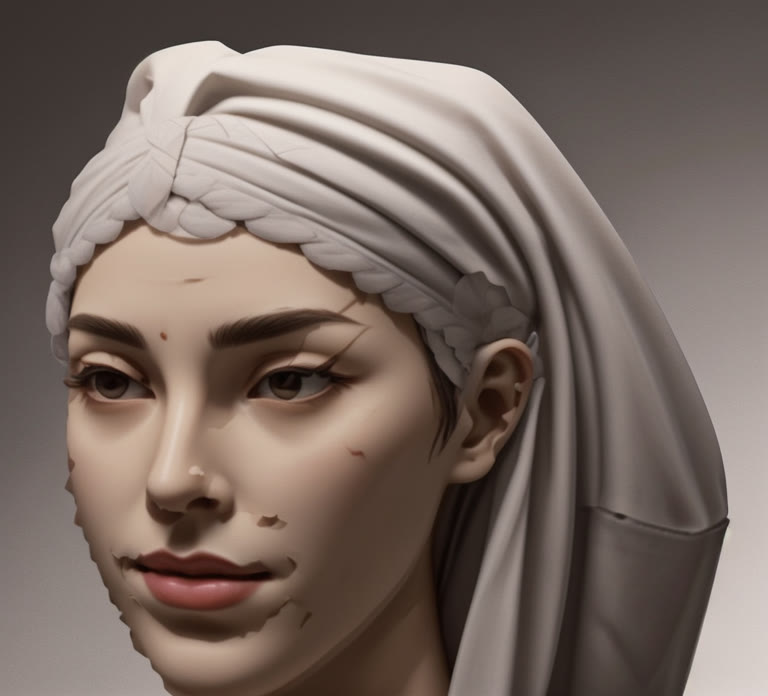
New Kingdom, 18th Dynasty
Quartzite head attributed to Amenemhat V (Kunsthistorisches Museum Vienna), three-quarter view: the Khat headcloth — smooth bag-like cloth over the head gathered into a rounded bag at the back, brow band, uraeus (damaged).
From the record: Head cloth worn by Hatshepsut, topped with the uraeus.
Reference photograph: Amenemhat V 01.JPG — CC BY-SA 3.0, Khruner; Own work (Wikimedia Commons)
Sources: 1
Khopesh sickle sword
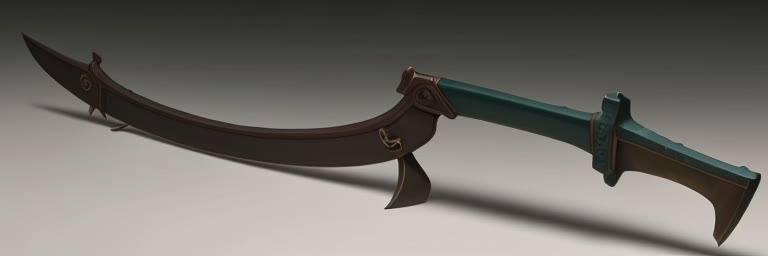
Second Intermediate - New Kingdom
Bronze khopesh sickle-sword inscribed for Ramesses II (Louvre E 25689), lying on its mount: hooked blade, straight shank and flanged hilt.
From the record: Curved sword 50-60 cm long, only the outer curve sharpened; two ceremonial examples in Tutankhamun's tomb; the Met calls the sickle sword newly imported from western Asia.
Reference photograph: Khopesh sword dedicated to Ramasses II-E 25689-IMG 2660.JPG — CC BY-SA 3.0 fr, Rama; Own work (Wikimedia Commons)
Kushite cap crown with double uraeus
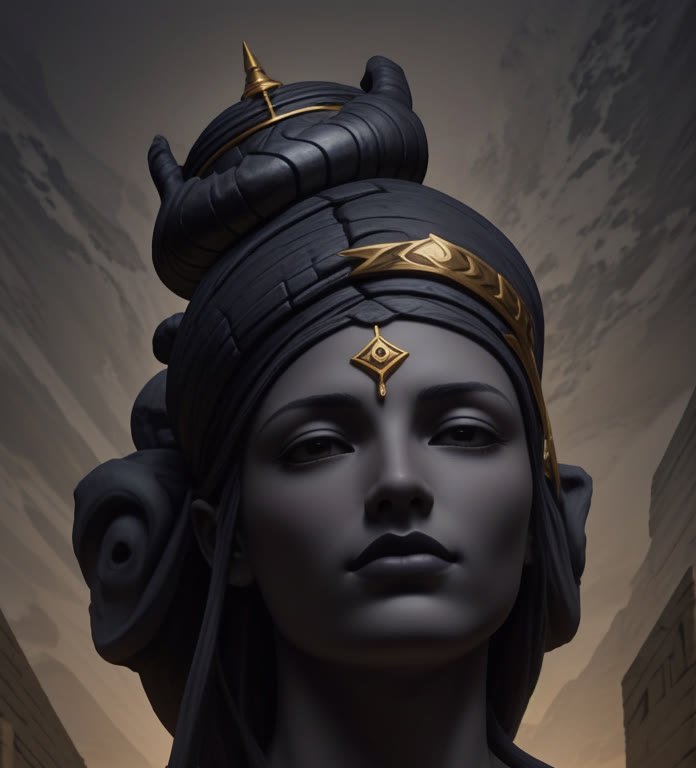
25th Dynasty (Kushite)
Granite statue of the Kushite king Tantamani from Dukki Gel (Kerma Museum), head: close-fitting skullcap crown with the double uraeus (two rearing cobras side by side) at the brow.
From the record: Close-fitting cap crown of the Kushite kings with two uraei at the brow, a bandeau with streamers and a diadem of tiny uraei; on the Met's kneeling king a falcon is engraved at the back.
Reference photograph: Kerma King Tantamani (r.664-653 BCE) XXV Dynasty.jpg — CC BY-SA 2.0, [https://www.flickr.com/people/gballardice/ Bruce Allardice; https://www.flickr.com/photos/gballardice/49631658982/ (Wikimedia Commons)
Kushite ram's-head amulet on a cord
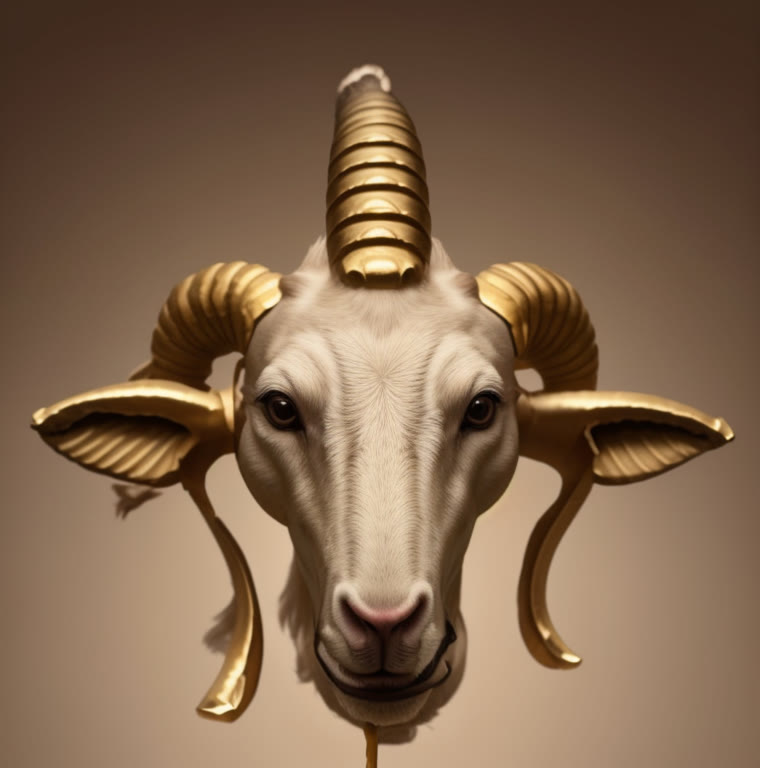
25th Dynasty (Kushite)
Gold ram's-head amulet, Kushite (Napatan) period (Met Museum 1989.281.98), front view: ram's head with curled ribbed horns and a uraeus on the brow.
From the record: Gold ram's head (H 4.2 cm) of the kind Kushite kings wore on a thick neck cord whose ends fell over the shoulders, sometimes with smaller ram heads at the ends; the ram stood for Amun.
Reference photograph: Ram's-head Amulet MET 1989.281.98 front.jpg — CC0, This file was donated to Wikimedia Commons as part of a project by the Metropolitan Museum of Art. See the Image and Data Resources Open Access Policy (Wikimedia Commons)
Libyan antelope-hide cloak with feathers
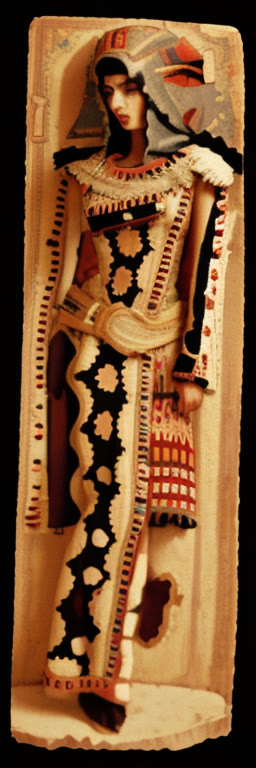
New Kingdom - Third Intermediate
Glazed faience inlay tile from Ramesses III's palace at Medinet Habu (Egyptian Museum Cairo): a Libyan chief with sidelock, beard and tattoos, wearing a long open patterned cloak over one shoulder.
From the record: Egyptian art shows the Meshwesh in antelope-hide cloaks with feathered headdresses and tattoos; the Book of Gates shows Libyans in open gowns exposing the shoulders.
Reference photograph: Lybians, from Medinet Habu.jpg — Public domain, Circa 1000 BCE; [1] (Wikimedia Commons)
Modius with uraei
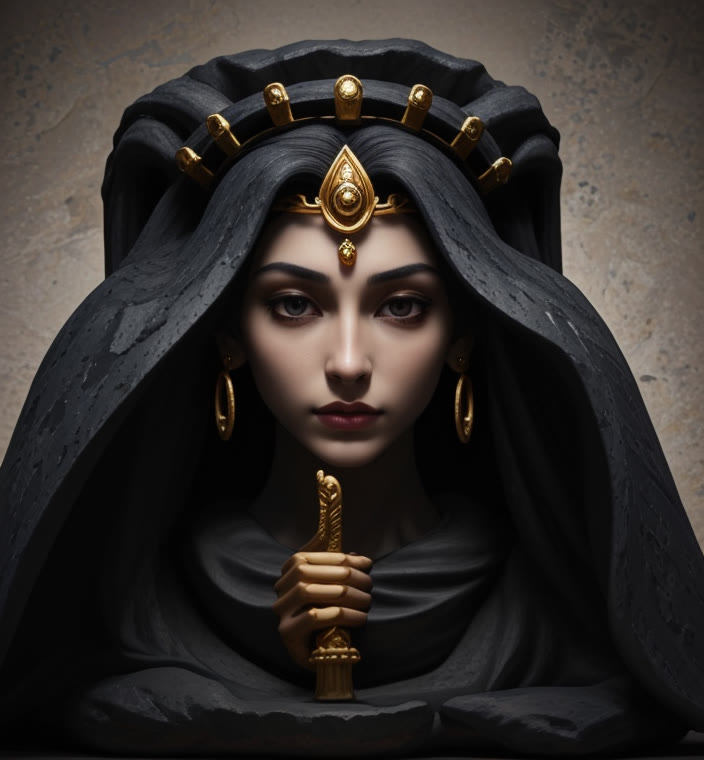
New Kingdom, 18th-19th Dynasty
Granite colossal statue of Queen Tuya (Vatican Museums), head: cylindrical modius ringed with a frieze of rearing uraei, over a long tripartite wig.
From the record: Flat-topped cylindrical headdress of royal women; Meritamen, daughter of Ramesses II, wears one decorated with uraei.
Reference photograph: Vatican Museums-1 (103).jpg — CC BY-SA 3.0, Darafsh; Own work (Wikimedia Commons)
Sources: 1
What the library feeds: the remakes gallery · the animation lab · Hathor Studio.