Hathor’s reference library: the crowns, weapons, armour, chariots, regalia, objects, landscapes and people that the remakes, the animations and the 3D scenes are assembled out of. Every piece was rendered on our own servers from the record kept with it, and where a museum photograph on Wikimedia Commons was the reference, that file, its licence and its photographer are credited under the render.
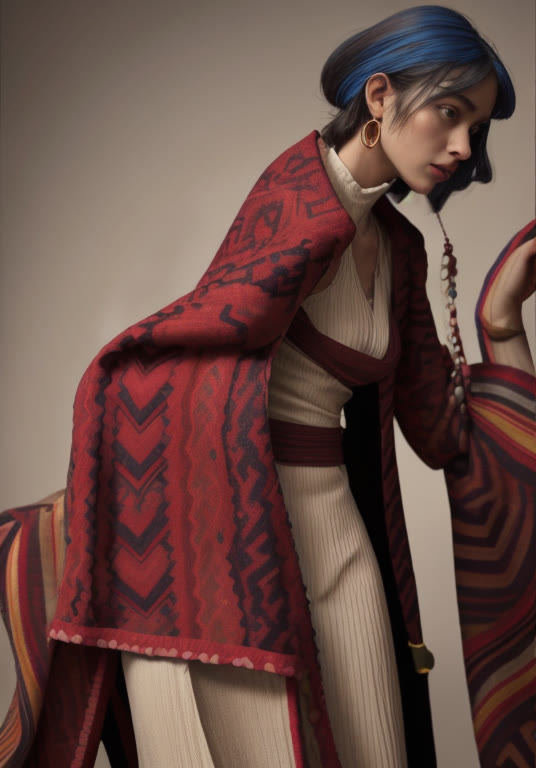
Aamu multicoloured garment
Middle Kingdom, 12th Dynasty
Met Museum facsimile painting (Norman de Garis Davies) of the Beni Hasan tomb of Khnumhotep II: Abisha, leader of the Aamu, in a one-shouldered wrap garment woven in multicoloured zigzag, chevron and diamond patterns in red, blue and white.
From the record: At Beni Hasan the Aamu men and women wear colourful garments; the women and a boy wear leather shoes, others sandals.
Reference photograph: Leaders of the Aamu of Shu MET DT272586.jpg — CC0, Norman de Garis Davies; This file was donated to Wikimedia Commons as part of a project by the Metropolitan Museum of Art. See the Image and Data Resources Open Access Policy (Wikimedia Commons)
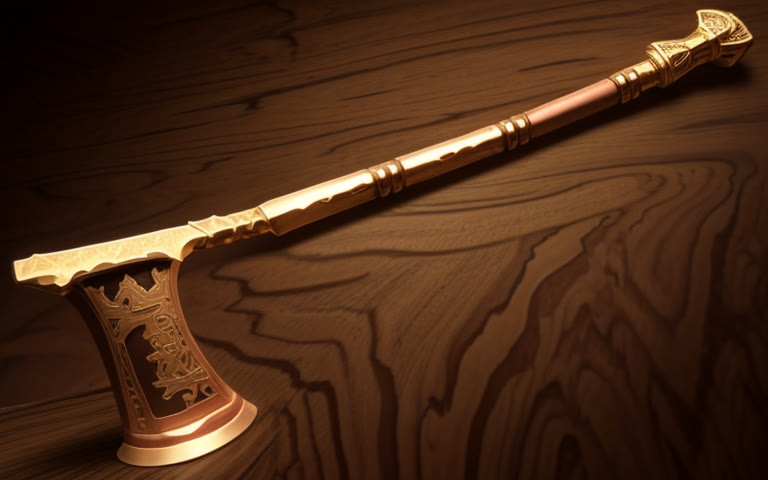
Ceremonial axe of Ahmose I
early 18th Dynasty
The ceremonial axe of Ahmose I from the burial of Queen Ahhotep (Luxor Museum), background retouched to black: gold-sheathed haft and flared blade inlaid with figures including a griffin and the king.
From the record: Inscribed ceremonial axe blade of copper, gold, electrum and wood with a Minoan-style griffin, from Ahhotep's burial (CG 52645 / JE 4673).
Reference photograph: Ceremonial axe of Ahmose I. Luxor Museum (background retouched).jpg — CC BY-SA 2.0, Jesse; This image has been extracted from another file (Wikimedia Commons)
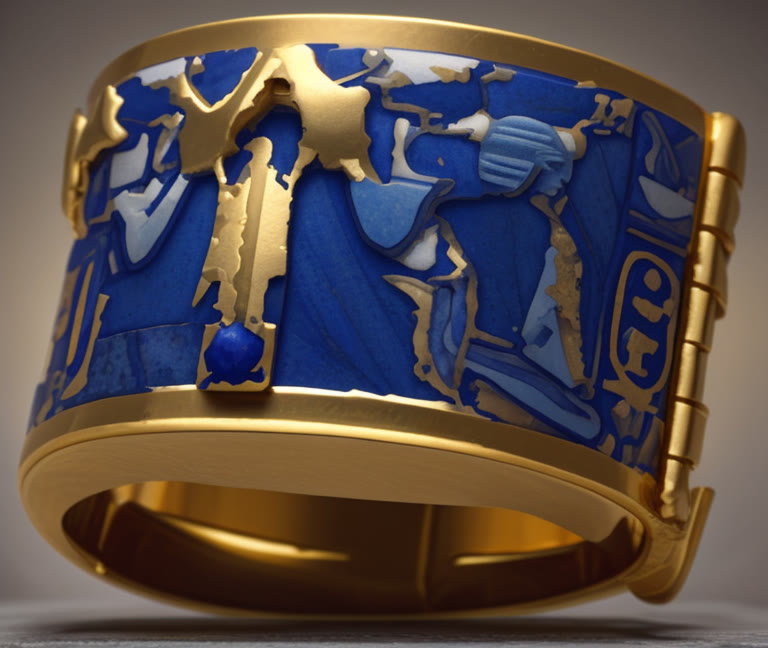
Lapis bracelet naming Ahmose
early 18th Dynasty
Gold and lapis lazuli bangle from the burial of Queen Ahhotep (Egyptian Museum Cairo, shown in Paris 2018): Ahmose I kneeling before the god Geb in gold figures on a lapis ground, with Ahmose's cartouche.
From the record: Bracelets of lapis lazuli inscribed with Ahmose I's name, from the burial of Ahhotep.
Reference photograph: Bracelet of Ahhotep II in 2018.jpg — CC BY-SA 2.0, Viva Fox/Francois Galluccio; https://www.flickr.com/photos/frangal/50398117046/ (Wikimedia Commons)
Sources: 1
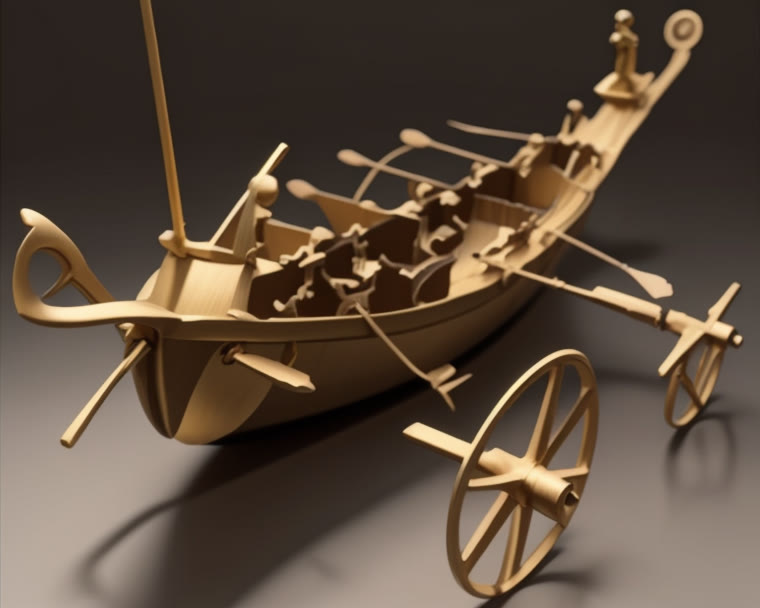
Gold model boat of Ahmose
early 18th Dynasty
The gold model boat from the burial of Queen Ahhotep (Egyptian Museum Cairo): gold boat with papyriform ends, twelve silver oarsmen, helmsman and prow figure, mounted on a four-wheeled bronze/wood wagon.
From the record: Gold and silver miniature boats commissioned by Ahmose I were found in Ahhotep's tomb.
Reference photograph: Gold and Silver Boat of Queen Ahhotep II.jpg — CC BY-SA 2.0, wishingbone/Jesse; https://www.flickr.com/photos/wishingbone/32556253408/ (Wikimedia Commons)
Sources: 1
Atef crown
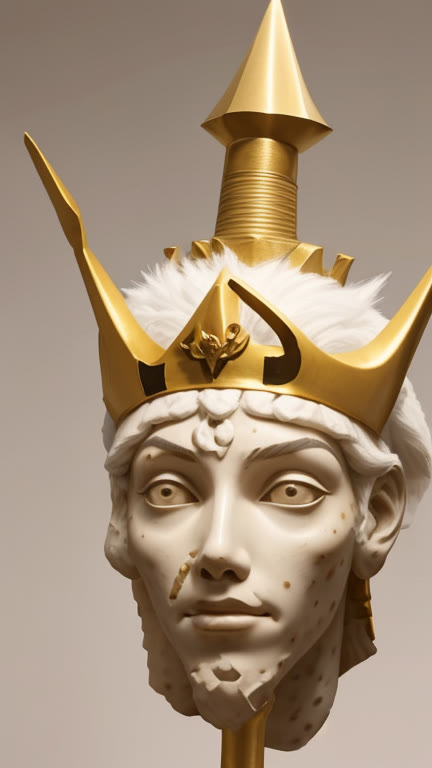
New Kingdom and later (divine)
Greywacke head of Osiris wearing the Atef crown (Met Museum 1972.118.195), front view: tall white-crown centre with uraeus, flanked by two ostrich plumes (upper tips broken off).
From the record: A white crown flanked by ostrich feathers, sometimes with uraeus and ram horns; worn by Osiris and other gods (shown in the tomb of Nefertari).
Reference photograph: Head of Osiris wearing Atef Crown MET 1972.118.195 01.jpg — CC0, This file was donated to Wikimedia Commons as part of a project by the Metropolitan Museum of Art. See the Image and Data Resources Open Access Policy (Wikimedia Commons)
Sources: 1
Bronze armour scales
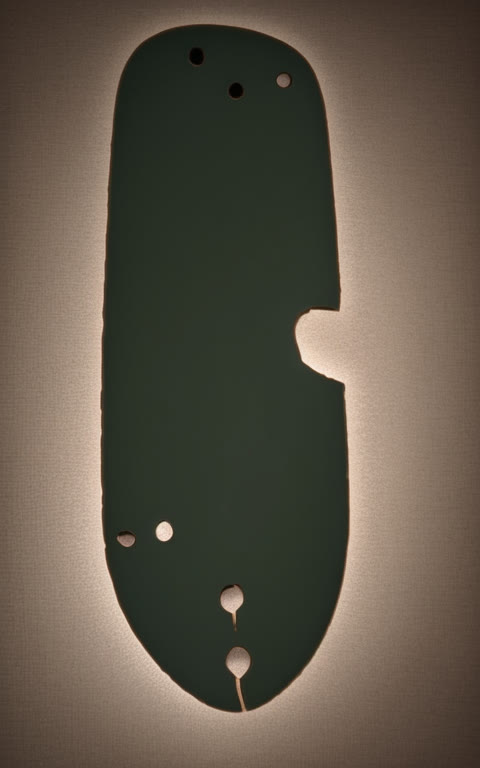
New Kingdom, reign of Amenhotep III
A single bronze armour scale from Amenhotep III's palace at Malqata (Met Museum 11.215.452e, Dynasty 18): elongated rounded-end plate with a raised central midrib and lacing holes at the top and bottom.
From the record: Bronze scales (about 11.5 cm) excavated at Amenhotep III's palace at Malqata, meant to be sewn to a linen or leather backing; body armour was a foreign import, probably not commonly worn.
Reference photograph: Scale from Armor MET 11.215.452e.jpg — CC0, This file was donated to Wikimedia Commons as part of a project by the Metropolitan Museum of Art. See the Image and Data Resources Open Access Policy (Wikimedia Commons)
Royal bull's tail
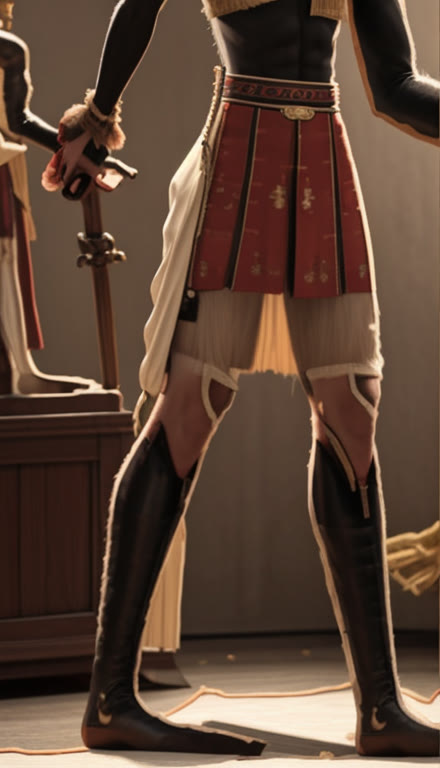
Early Dynastic onward
Detail of the Narmer Palette (smiting side, low relief in siltstone): the king's belted kilt with the bull's tail hanging from the back of the belt down behind his legs.
From the record: A bull's tail hung from the king's belt, shown on the Narmer Palette.
Reference photograph: Narmer Palette smiting side.jpg — Public domain, Unknown authorUnknown author; http://www.studyblue.com/notes/note/n/exam-1/deck/3768468 (Wikimedia Commons)
Sources: 1
New Kingdom composite bow
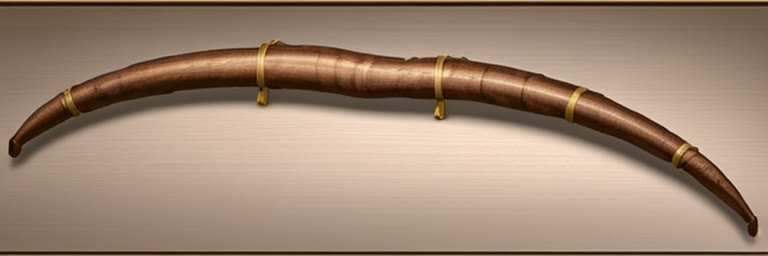
New Kingdom
A New Kingdom composite bow from Tutankhamun's tomb (Egyptian Museum Cairo, P30-75) on its display supports: slightly recurved limbs bound with gold and bark decorative bands.
From the record: Bow built of horn on the belly and sinew on the back, glued and covered with birch bark; the Egyptian army's principal weapon.
Reference photograph: By ovedc - Egyptian Museum (Cairo) - 211.jpg — CC BY-SA 4.0, Ovedc; Own work (Wikimedia Commons)
Sources: 1
What the library feeds: the remakes gallery · the animation lab · Hathor Studio.