Cards from the herb atlas. Each card carries what the atlas actually holds for that plant: the Latin name, the traditions that use it, what it is used for, the active compounds, the proposed mechanism, the evidence grade, the dose range, and the interactions and cautions. Two renders of each card — one in the house Art Nouveau register, one in a plainer botanical-guide register. The labels are not printed in the images; the words that belong on each card are the headings below it.
Ginger — Zingiber officinale


Traditions: folk-European · TCM · Ayurveda · Unani
Used for: nausea (pregnancy, motion, post-operative, chemotherapy adjunct); dyspepsia; menstrual pain; osteoarthritis pain (modest)
Active compounds: 6-gingerol, 6-shogaol (forms on drying/heating), zingerone, zingiberene
How it is thought to work: Gingerols and shogaols inhibit COX-2 and 5-LOX (dual eicosanoid suppression) and antagonise gut 5-HT3 receptors, which is the main proposed anti-nausea route; fresh rhizome also carries zingibain, a cysteine protease (bromelain-like meat tenderiser), though it is not the active anti-emetic principle.
Evidence: established — Reasonable trial support for pregnancy nausea (included in the Cochrane review of NVP interventions, with low-certainty but consistent benefit) and an EMA well-established/traditional monograph for motion sickness; evidence for arthritis pain is weaker.
Dose: Nausea: 1-1.5 g dried ginger powder per day in divided doses (studied range 0.5-2 g); motion sickness (EMA): 1-2 g powdered rhizome 30-60 min before travel. Tea: 1-2 g sliced fresh root steeped 10 min.
Cautions and interactions:
- Additive bleeding risk is theoretical-to-modest with anticoagulants/antiplatelets (warfarin, clopidogrel) at >4 g/day; stop 1-2 weeks before surgery as a precaution
- Heartburn, reflux and loose stool at high doses
- Pregnancy: studied doses up to ~1 g/day look safe; avoid large supplemental doses near term
- Gallstones: use caution (cholagogue)
In the traditional systems: TCM: fresh (sheng jiang) pungent and slightly warm; dried (gan jiang) pungent and hot. Ayurveda: 'vishwabhesaj' (universal medicine), katu rasa, ushna virya, pacifies Vata and Kapha, may aggravate Pitta.
Folk correspondence: No separate Culpeper entry; listed among his simples ('Zingiberis... helps digestion, warms the stomach'). Modern Western-herbal lists assign Mars.
Peppermint — Mentha x piperita

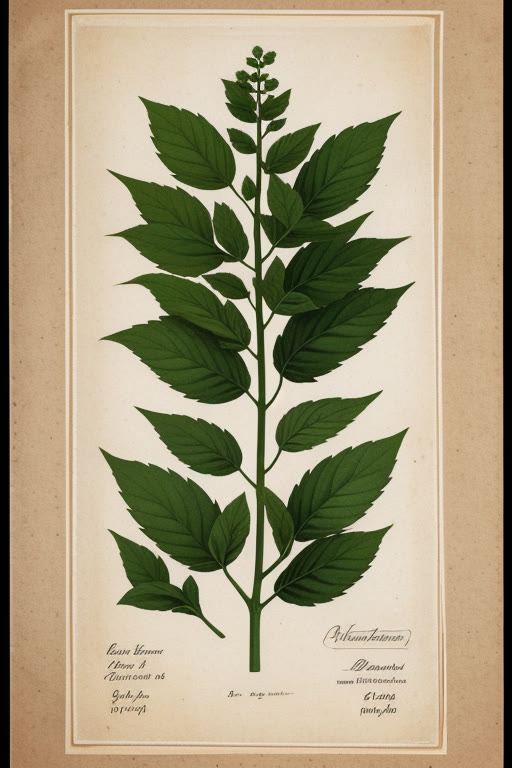
Traditions: folk-European · Unani
Used for: irritable bowel syndrome (enteric-coated oil); indigestion and gas; tension headache (topical oil); cold symptoms (inhalation)
Active compounds: menthol, menthone, menthyl acetate, 1,8-cineole, rosmarinic acid (leaf)
How it is thought to work: Menthol blocks L-type calcium channels in intestinal smooth muscle (antispasmodic) and activates TRPM8 cold receptors; peppermint oil mildly inhibits CYP3A4 in vitro, of uncertain clinical size.
Evidence: established — A 2019 meta-analysis of 12 RCTs (835 patients) found enteric-coated peppermint oil beat placebo for global IBS symptoms (NNT about 3) and abdominal pain (NNT about 4); EMA has a well-established-use monograph for the oil.
Dose: IBS: 0.2-0.4 mL (about 180-225 mg) enteric-coated peppermint oil, 2-3 times daily before meals for up to 3 months. Tea: 1.5-3 g leaf per cup, 3 times daily. Headache: 10% oil in ethanol on temples.
Cautions and interactions:
- Reflux/heartburn (relaxes lower oesophageal sphincter); non-enteric-coated oil worsens it
- Do not apply oil to the face or chest of infants and young children: menthol can trigger laryngospasm/apnoea
- Enteric coating dissolves early with antacids, PPIs or H2 blockers - separate by 2 h
- Essential oil is toxic if swallowed neat in quantity
- Gallstones/bile-duct obstruction: avoid oil
In the traditional systems: TCM (bo he, Mentha haplocalyx): pungent, cool; disperses wind-heat. Ayurveda: cooling, pacifies Pitta and Kapha.
Folk correspondence: Venus (Culpeper, 'Mint: It is an herb of Venus')
German Chamomile — Matricaria chamomilla (syn. M. recutita)

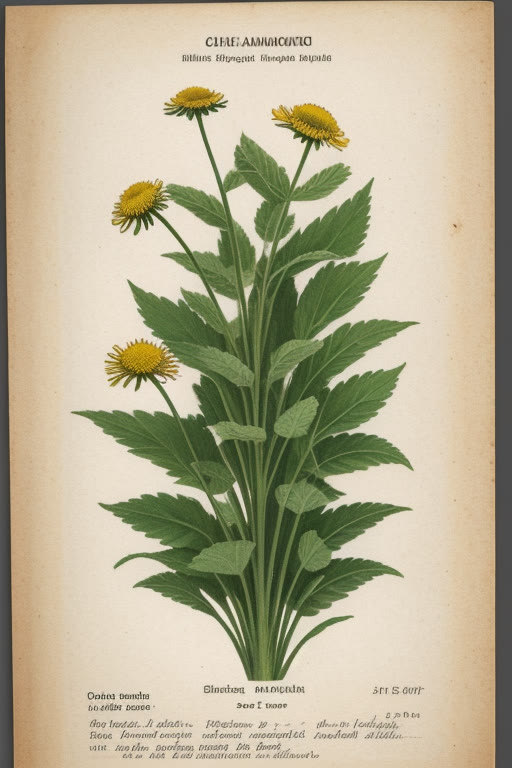
Traditions: folk-European · Unani
Used for: mild anxiety; sleep aid (folk); indigestion and colic; mouth/skin inflammation (rinse, compress)
Active compounds: apigenin, alpha-bisabolol, chamazulene (forms on distillation), matricin
How it is thought to work: Apigenin binds the benzodiazepine site of GABA-A receptors weakly and inhibits COX-2 expression; bisabolol and chamazulene are anti-inflammatory; chamomile inhibits CYP1A2 and CYP3A4 in vitro.
Evidence: traditional-with-some-evidence — Small trials suggest modest benefit for generalized anxiety disorder (oral extract) but sleep evidence is thin; EMA recognises it as a traditional herbal medicine for minor GI complaints and mouth/skin inflammation.
Dose: Tea: 2-4 g dried flower heads in 150 mL boiling water, covered 5-10 min, 3-4 times daily. Anxiety trials: 500 mg standardized extract 1-3 times daily (up to 1500 mg/day).
Cautions and interactions:
- Allergy in people sensitive to Asteraceae (ragweed, daisy, marigold) - rare anaphylaxis
- Possible additive bleeding with warfarin (case reports)
- Additive sedation with benzodiazepines, alcohol, other sedatives
- Ciclosporin and other CYP3A4 substrates: monitor
In the traditional systems: Ayurveda: cooling, calms Pitta and Vata. Unani: babuna, hot and dry in first degree.
Folk correspondence: Moon (Culpeper, 'Camomile... under the dominion of the Moon'); many later herbals instead give the Sun
Dose ranges and cautions are the atlas’s own record, with the evidence grade it carries — "established" and "tradition" are not the same claim, and the card says which it is.