Plant Medicine for Humans: The Stack, As It Actually Stands
"My Husband and I are starting a Health Regimen based on a Unified Theory of Nutrition based on how Plants are grown Indoors, primarily Marijuana, which itself borrows much from the Tomato Industry. The Unified Theory though is based on his own research on Epigenetics. Or Gene Expression."
— @KaliVanKush, Plant Medicine for Humans: Adding Quartz to Human Cells, 8 September 2021
That paragraph opened the series and it still states the whole thesis. Everything below is the same regimen, five years on.
The 2021 Log showed what was on the shelf five years ago, photographed one bottle at a time. This is the other half of the answer: what is on it now — and, more to the point, the chart it is being fed from.
What it is for
Say the point out loud, because the list means nothing without it.
A person accumulates deficiencies across a lifetime. Not one dramatic one — a slow arithmetic of them. An enzyme you were born running at 65% of normal. A cofactor that oxidises faster than you replace it. A mineral the gut stopped pulling as well at forty as it did at twenty. Collagen that cross-links. Telomeres that shorten. Proteins that glycate. None of it announces itself; it just compounds, and at some point the compound total is what kills you.
This stack is the correction, and the target is to live to two hundred.
That is the Institute's stated aim and I am not going to soften it into a wellness sentence. But I am going to be exact about where it stands, because overstating it would be the fastest way to make it worthless: nothing in this list has been demonstrated to extend a human lifespan. The paper behind the stack says so in plain language about its own best candidate — cycloastragenol improves telomere-length biomarkers, and "it is not yet demonstrated to extend lifespan (nobody has taken it long enough to confirm)." That is the honest state of the art, written by the person taking it.
So: the aim is two hundred years. The evidence is a set of mechanisms, each pointed at a specific thing that degrades, each graded on its own. The gap between those two sentences is the research programme.
Because that is what this is. The series was never called Supplements for Humans.
Marijuana, borrowing from tomatoes. That is the lineage of everything below. The stack is a feeding schedule for a human being, built by someone who already knew how to feed a plant, and the reason it looks different from the supplement aisle is that the supplement aisle is not organised around a feed chart. It is organised around daily values.
Read it as a feed chart
Four ideas carry over from indoor horticulture, and all four are load-bearing here.
The yield is set by the scarcest input, not the largest. This is Liebig's law of the minimum, and every grower knows it: dump nitrogen on an iron-deficient plant and nothing happens, because nitrogen was never the limit. Applied to a person it is the whole argument of the methylfolate paper — an SSRI cannot recirculate serotonin that a cofactor bottleneck stopped you from making. The bottleneck is the dose that matters.
Elements come in tiers. Plants take macronutrients (N, P, K), secondary nutrients (Ca, Mg, S) and micronutrients (Fe, Mn, Zn, B, Cu, Mo). The 2021 bone post read the Fox Farm feeding charts and noticed the obvious: calcium, magnesium and sulfur are on both sides of the comparison. Epsom salt is a fertiliser and a bath.
Form beats quantity. Growers do not feed iron sulphate, because free iron precipitates out of solution and never reaches the root. They feed chelated iron — the mineral wrapped in an organic carrier that keeps it available. That single fact is why this list prints brands and specifications instead of generic names.
When the root is the bottleneck, feed the leaf. Foliar feeding is a real technique with real kinetics, and its human equivalent is the skin — which is why the soap, salve, oil and beeswax work is part of the same programme rather than a cosmetics sideline.
The 2021 series even applied the growth cycle: germination, seedling, veg, flower, with bone growth as the veg stage. A forty-foot apple tree out-yields a twenty-foot one. Build the frame first and it carries more. You make your bones stronger to carry more meat.
One thing to understand before the list
This is not a replacement for the 2021 shelf. The nine below are the items recorded in February 2026 against The Amplification Framework — the slots that framework names. They are an addition to what was already running, not a swap, and nothing the 2021 posts described got thrown out because a newer list exists.
The silicate is the clearest case and the operator's own example: it was in the 2021 series, it is in the bottle now, it never stopped. Where an older item is still in use, it is still in use.
A note on why the brands are here. Biohacking Part 2 worked through fenugreek at length to establish it: Testofen is standardised to fenusides, Furosap to 20% protodioscin, and "Fenugreek 500 mg" off a shelf is ground seed standardised to nothing. The molecule that was studied is the molecule that was studied. A stack list without forms and figures is not a stack list — it is a shopping list for the wrong thing.
The nine
1. Nutricost L-Methylfolate — 5-MTHF, 15 mg, 120 caps
Slot: central cofactor amplifier — BH4 salvage-pathway regeneration.
On the chart: the limiting input. This is Liebig's law with a name.
The anchor, and the one item whose dose is not arbitrary. 15 mg is the figure from the Papakostas (2012) trials, where 15 mg/day beat placebo in SSRI-resistant depression and 7.5 mg/day did not. It was bought at 15 mg because the literature was read first. Everything else is arranged around keeping this pathway supplied.
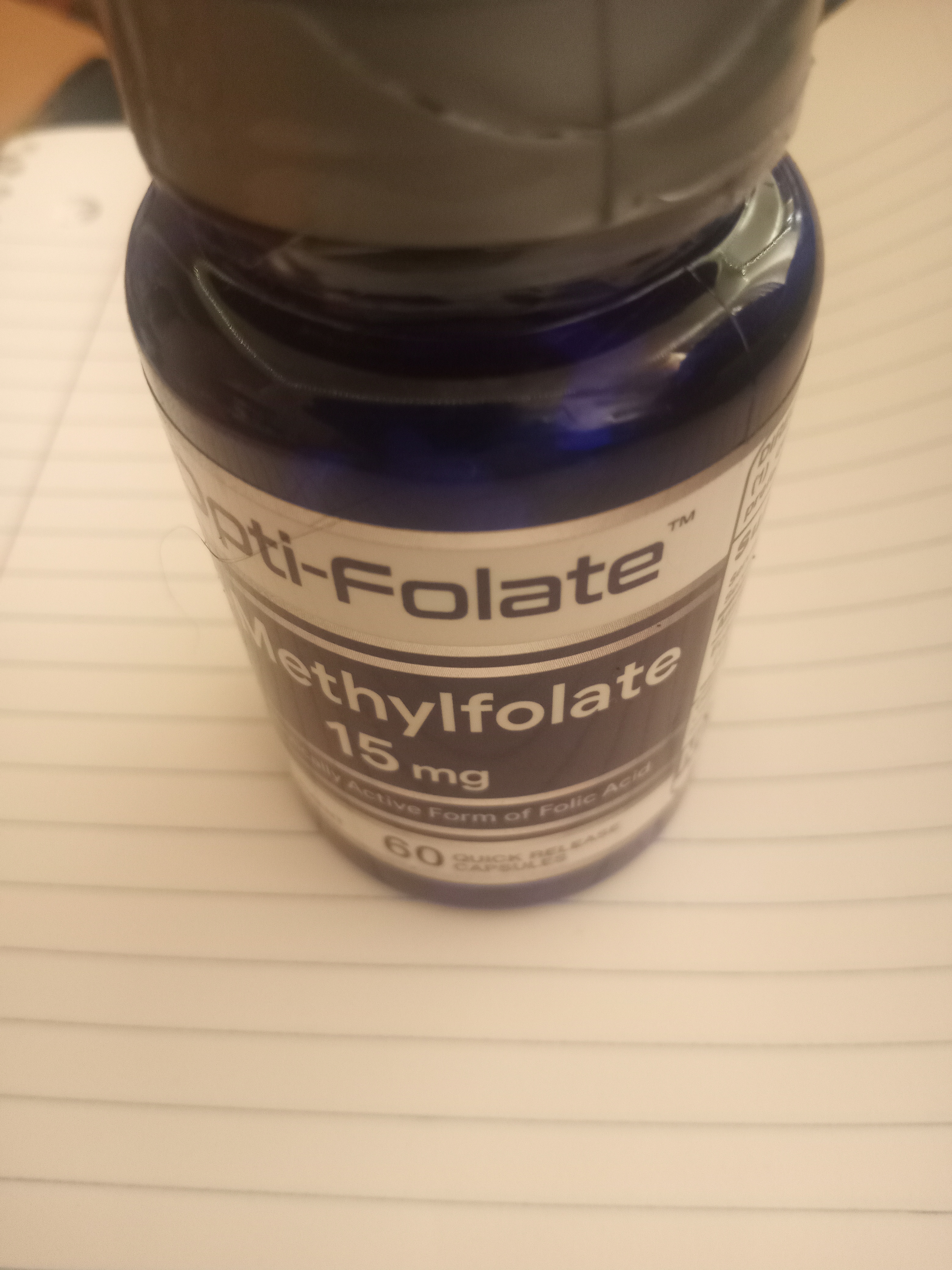
The 2021 bottle, from the original post.
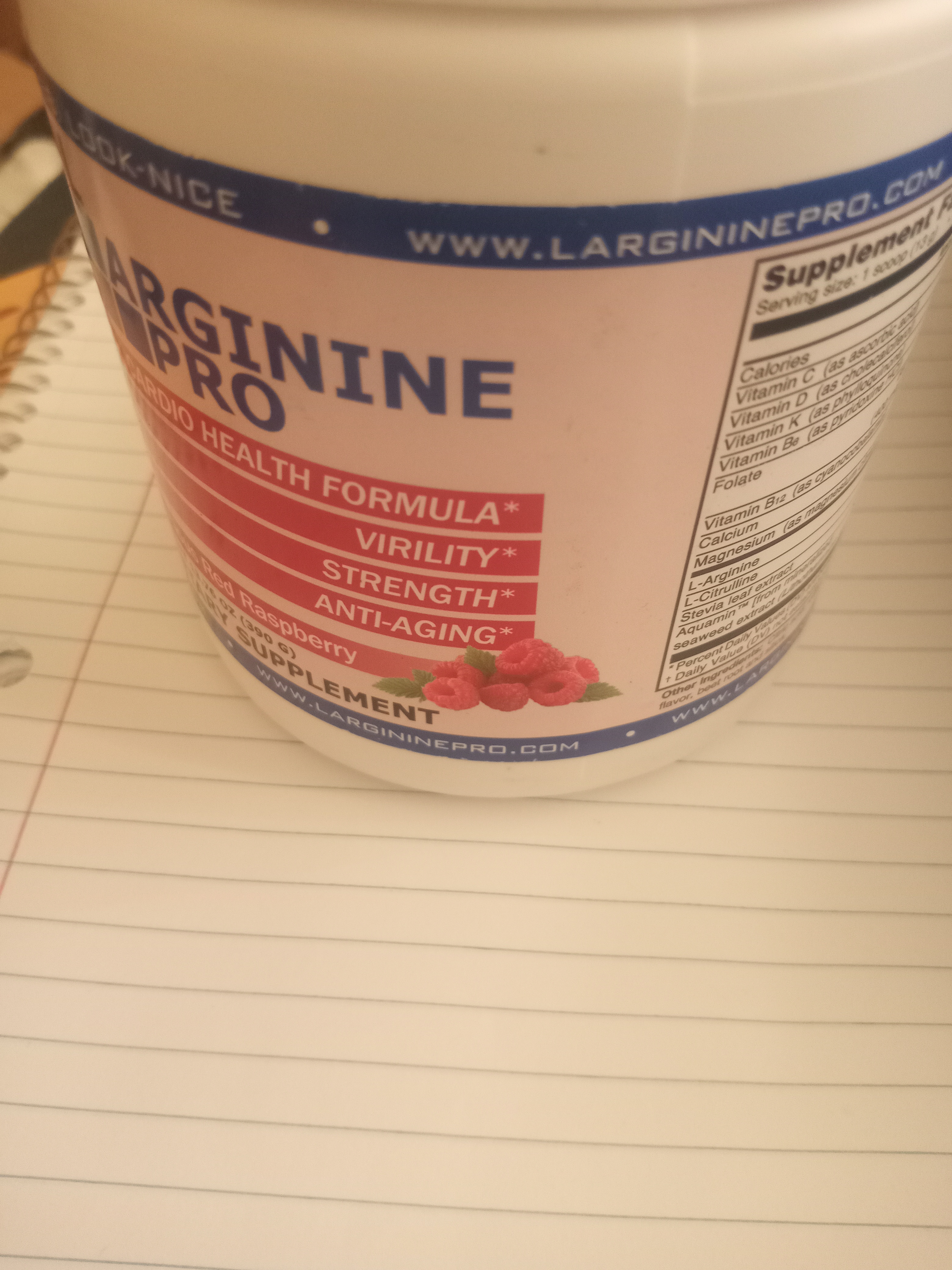
2. Swanson L-Arginine — Maximum Strength, 850 mg
Slot: NOS substrate; the creatine / nitric-oxide recycling pathway.
On the chart: an amino-acid feed. The 2021 post said you could throw out the fertiliser shelf and buy azomite, epsom salt and amino acids — "L-Arginine from whatever Source" — and then took the same three for the humans.
A direct continuation of the 21 September 2021 post, which ran an arginine/citrulline blend alongside the methylfolate for exactly this reason. Nitric oxide synthase is BH4-dependent — the same cofactor the methylfolate regenerates. Arginine and folate are not two supplements here. They are two ends of one pathway.
3. 21st Century Amino Acid Complex
L-Phe 32 mg · L-Tyr 31 mg · L-Lys 93 mg · L-Leu 106 mg, plus seven others.
Slot: hydroxylase substrates; branched-chain support.
On the chart: the rest of the amino-acid feed — the tea of asparagus and pumpkin guts, in a capsule.
Phenylalanine and tyrosine are deliberate: they are the substrates for two of the three hydroxylases BH4 serves. Leucine is the mTOR signal for muscle protein synthesis. Supply the enzyme and starve it of substrate and nothing happens — which is Liebig again, from the other direction.
4. Swanson Bamboo Extract — 70% Silica, 60 caps
Slot: the mineral amplification parallel — the silicon source.
On the chart: cell-wall silica. Growers feed it to cannabis for the same reason banana plantations do: a stronger wall carries a heavier harvest.
The silicate never left the stack. It is the one line you can follow unbroken from "Adding Quartz to Human Cells" to the bottle in the cupboard today, and the human question it was always pointed at is collagen.
What has changed is only the source, and here the older choice is the better one.
The 2021 post went after orthosilicic acid and used horsetail, a plant that carries both the silica and the enzymes that handle it. That was the right target and it still is. The bioavailable species is orthosilicic acid (H₄SiO₄) — soluble monomeric silicon, the only form absorbed in the gut. Polymerised silica does nothing, and quartz as respirable mineral dust is what causes silicosis.
So read "70% Silica" on a bamboo label for what it is: a figure for total silica, most of it polymerised, not a figure for the species that gets in. The bioavailability of bamboo silica is very low — a high number on the label and a small amount absorbed are not in tension, they are the same fact from two ends. Bamboo is what is in this stack; it is not what I would tell you to buy.
If you are building this yourself, use the older route. Choline-stabilised orthosilicic acid — ch-OSA, sold as BioSil — is the form with human trial data behind it, and the choline stabilisation exists precisely to stop the silicic acid polymerising in the bottle. Horsetail, as in 2021, is the botanical version of the same idea.
That is the fenugreek lesson turned on ourselves: the form is the intervention, and the label is not the form.
5. Swanson Albion Multi-Mineral — Amino Acid Chelate with Iron, 120 caps
Slot: heme cofactor for CYP450 and the hydroxylases; the chelated mineral matrix.
On the chart: the micronutrient line — Fe, Mn, Zn, B, Cu, Mo — delivered chelated, exactly as it would be to a root.
The most direct survival from 2021, and the only product already named anywhere in the biohacking series. Albion is the chelation principle applied to a person, and the 2021 chelated-minerals post printed the whole label for the same reason this one prints brands: TRAACS bisglycinates and Albion glycinate complexes are not "minerals," they are specific carriers.

6. Nutricost Strontium Citrate — 750 mg, 120 caps
Slot: bone mineral matrix; the extension of the mineral layer.
On the chart: the calcium tier — the secondary nutrients, and the veg stage.
Strontium substitutes for calcium in the hydroxyapatite lattice — the same mineral @kalivankush is now putting into a whitening gel. In a plant, calcium is cell walls and new growth. In a person it is the frame that carries the harvest.
→ Alkaline Earth Metals, Calcium Signaling, and Strontium Mimicry

7. Swanson Astragalus Root — Full Spectrum, 470 mg, 100 caps
Slot: immune modulation; telomerase activation as a cycloastragenol source; anti-inflammatory.
On the chart: this one has no clean horticultural analogue, and I am not going to invent one.
It does not come from 2021. It comes from 2016, out of the operator's "Building Brains" research — the neurogenesis and life-extension work that predates the Plant Medicine series and ran under the Church of Neuroscience framing.
8. NOW L-Carnosine — 500 mg, 50 caps
Slot: antioxidant and anti-glycation — specifically, protecting BH4 from oxidative degradation.
On the chart: the nearest plant parallel is real — rosemary's carnosic acid is a sacrificial antioxidant protecting the oil it sits in. Same job, different organism.
Also from the 2016 research, and note what it is doing: the stack does not merely supply the cofactor, it defends it. BH4 is lost to oxidation, so an antioxidant aimed at that loss is not a general wellness item in this design — it is the slot that stops the amplifier draining.
9. Swanson Lutein — eye and vision
Slot: carotenoid antioxidant, completing the systemic antioxidant layer.
On the chart: carotenoids are what plants make for photoprotection in the first place. This is the most literal borrowing in the list — a plant's own light-damage defence, eaten.
What the list is actually showing
Read as a feed chart rather than nine purchases:
- Substrate / the amino-acid feed — arginine, the amino acid complex.
- The limiting cofactor — L-methylfolate regenerating BH4; the chelated minerals as enzyme cofactors.
- Protecting the cofactor — carnosine, lutein.
- Structural minerals — silica for the cell wall, strontium for the lattice.
- The older thread — astragalus and carnosine, carried from 2016.
Three of the nine are the same lines running continuously since 2021: arginine, the silicate, and the Albion chelate. Two come from the 2016 Building Brains work. The methylfolate is the hinge between them.
What degrades, and what is pointed at it
Read the nine a third way — not as a framework and not as a feed chart, but as a list of things that fail with age and the item aimed at each.
| What degrades | What is pointed at it |
|---|---|
| Methylation capacity — an MTHFR polymorphism is a lifelong 35–70% enzyme deficit, and the demand does not fall with age | L-methylfolate, 15 mg |
| BH4 to oxidation — the cofactor is lost faster than it is made, and all three monoamine systems sit downstream | L-carnosine, lutein, as the degradation-inhibitor slot |
| Vascular nitric oxide — endothelial NO output falls with age, and NOS is BH4-dependent | L-arginine, 850 mg |
| Protein glycation — sugars cross-link proteins irreversibly over decades | L-carnosine, an anti-glycation dipeptide; with vitamin E it has extended life in animal models |
| Telomere length — shortening with each division | Astragalus root, as a cycloastragenol source; biomarker evidence only |
| Collagen and connective tissue — cross-linking, loss of elasticity | Silicon, via orthosilicic acid — and see the bamboo caveat above |
| Bone mineral density — lost steadily from the fourth decade | Strontium citrate, substituting into the hydroxyapatite lattice |
| Mineral absorption — gut uptake declines, and free minerals were never absorbed well anyway | Albion amino-acid chelates |
| Macular pigment — depletes with age and light exposure | Lutein |
| Muscle protein synthesis — the anabolic signal weakens | Leucine in the amino acid complex |
And one that is not a decline at all. The paper argues the brain does not finish at twenty-five — prefrontal and intracortical myelination runs into the thirties, and the cranial sutures are still consolidating between thirty and forty. Which means BH4-dependent synthesis is under maximum demand in exactly the years people are told development is over. The paper's reframe is blunt: late-twenties depression attributed to career or existential stress may be a methylation crisis at the moment the brain's neurotransmitter infrastructure is being finalised.
That is the shape of the whole argument. Not a tonic. A schedule of known deficits, each with something aimed at it, written down so it can be checked.
The gaps, now closed
When this post first went up it named two things that were missing. Both are done.
All nine items now have a monograph. The five that were missing have been written and are live:
- L-Arginine — the NOS substrate; why citrulline raises plasma arginine better than arginine does, and why an uncoupled NOS makes superoxide instead of nitric oxide
- Amino Acid Complexes — phenylalanine, tyrosine and tryptophan as the BH4-dependent hydroxylase substrates, and the honest note that the leucine in a complex is about a thirtieth of a dose
- L-Carnosine — anti-glycation and carbonyl scavenging, and why serum carnosinase means β-alanine is the supplement that actually raises muscle carnosine
- Lutein — macular pigment, the AREDS2 substitution, and the beta-carotene harm in smokers that it replaced
- Astragalus and Cycloastragenol — telomerase activation, and the gap between a purified aglycone and a root capsule
Stack Substances now indexes 78.
Silicon and Collagen has caught up with the shelf. It now carries bamboo extract explicitly — that "70% silica" is total silica, overwhelmingly polymerised, that the bioavailability is very low, and that bamboo is what this stack contains but not what the page recommends. A new section states the recommendation plainly: ch-OSA / BioSil, or horsetail, because both aim at the species that is absorbed rather than at the percentage on the label.
Two of those pages are blunt about the Institute's own choices — the astragalus page says a root capsule is not a telomerase intervention, and the silicon page says the bamboo in this stack is not what it would tell you to buy. That is the correct way round. A library that only grades other people's supplements is not grading anything.
One thing still outstanding: the photographs here are the 2021 bottles. New ones will replace them.
This is a research record, not medical advice. This stack was assembled independently and was not prescribed by any physician. Nothing here is a prescription or a diagnosis. Check B12 before taking folate in any form — folate corrects the anaemia of B12 deficiency while the neurological damage continues silently.